

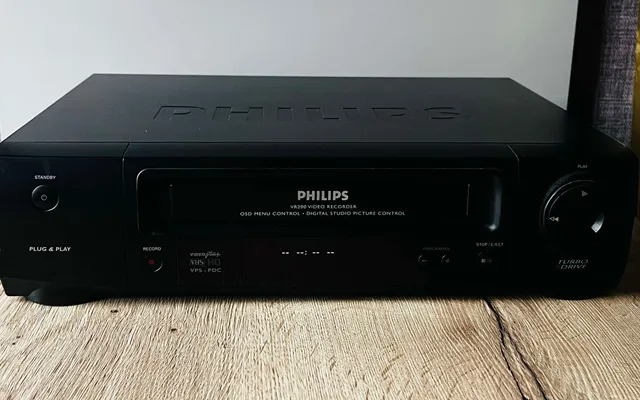

VCRs price list
Last updated Monday, 19 Oct 2026



Loading...
Last updated Monday, 19 Oct 2026
Think VCRs are gone for good? Not even close. Across the UK, people still hunt down reliable VCRs and video players because those tapes on the shelf hold birthdays, weddings, and TV moments that never made it to streaming. Whether you’re preserving family history, revisiting classic films, or digitising your collection, a good VCR is the bridge between then and now.
Popular offers on VCRs tend to pop up in waves—seasonal clear‑outs, estate sales, and refurbished releases can make prices tumble. Bundles that include cables, a remote, and even blank tapes add extra value. Smart buyers compare multiple retailers side by side on a comparison site such as ZoneOffer to see which listing, condition grade, and warranty length delivers the best deal.
The modern VCR market is driven by scarcity, condition, and features. Prices can vary a lot depending on whether a deck is basic mono or a Hi‑Fi stereo model with 4‑head playback. S‑VHS units and pro‑grade decks command more. Refurbished models from trusted specialists cost more than untested finds, but they usually save you headaches and repair bills.
Looking for a simple player to watch old tapes? Basic units—often 2‑head, mono audio, composite or SCART output—sit at the entry level. These are perfect for occasional viewing on a secondary TV. Expect light cosmetic wear and missing remotes at this price. Just make sure fast‑forward, rewind, and eject feel smooth and the loading mechanism isn’t grinding.
Mid‑range decks hit the sweet spot for most people. A 4‑head mechanism improves picture stability and slow‑motion, while Hi‑Fi stereo audio brings movies and concerts to life. If you want a clean playback chain for digitising, a solid mid‑tier stereo VCR paired with a USB capture device is often the best value without going fully pro.
Premium S‑VHS models and broadcast‑leaning decks fetch higher prices because they’re engineered for cleaner images and steadier playback. Many include features like quasi‑S‑VHS playback, picture controls, and tape‑friendly transport systems. If you’ve got dozens of tapes to digitise, one premium deck can pay for itself by saving time and reducing re‑captures.
VCRs aren’t one‑size‑fits‑all. You’ll see straightforward players, full recorders, DVD/VHS combo units, S‑VHS decks, and even D‑VHS machines in some listings. Understanding the differences helps you pick the right tool for your tapes and your TV setup.
A VHS player is focused on playback, while a recorder can also capture from TV or external sources. Since analog terrestrial tuners are obsolete in the UK, recording live TV now requires a set‑top box feeding the VCR through composite or SCART. If you only need playback for viewing or digitising, a player is fine—just don’t pay extra for recording features you won’t use.
Combo decks are convenient space‑savers, letting you watch DVDs and VHS from one box. Some offer one‑touch dubbing from VHS to DVD, but results vary and DRM restrictions can interfere. Combos are great for living rooms with limited shelf space, yet dedicated VCRs usually handle worn tapes more gently due to beefier transports and better tracking controls.
S‑VHS decks can play standard VHS and, when paired with the right sources, deliver sharper playback via S‑Video. D‑VHS was a later digital tape format that can still play regular VHS in many models. For most collectors, S‑VHS playback quality and better picture controls are the real win, especially when sending S‑Video into a capture card.
Two decks can look alike yet perform very differently. Focus on heads, audio circuitry, tape transport, and output options. Small details like jog/shuttle dials, tape counters, or on‑screen display clarity can make long digitising sessions more manageable and consistent.
More heads generally mean smoother playback, clearer still frames, and improved tracking with tricky tapes. A 4‑head deck is ideal if your tapes include home videos with uneven recordings. For casual viewing of well‑kept commercial tapes, 2‑head can be enough. If you’re digitising, 4‑head is the safer bet.
Hi‑Fi stereo VCRs record sound into deep layers of the tape, yielding richer, hiss‑free audio when compared with linear mono tracks. If your tapes include music performances or you’re nostalgic about authentic soundtracks, Hi‑Fi is worth prioritising. Just confirm the Hi‑Fi indicator lights up during playback to ensure the deck is truly reading those tracks.
Analog tuners built into VCRs no longer receive Freeview. For recording, you’ll need an external Freeview box connected via SCART or composite. For playback, tuners don’t matter—focus on outputs that match your TV or capture device. If your TV only has HDMI, plan on a quality upscaler for the cleanest, least noisy image.
Old meets new doesn’t have to be complicated. Most VCRs use composite RCA, SCART, S‑Video, and RF coax. Modern TVs gravitate to HDMI, so an upscaler bridges the gap. For digitising, a USB capture card is your best friend. Keep cable runs short—under 6 feet where possible—to reduce noise pickup.
In the UK, SCART was the standard for decades. Many SCART adapters break out to RCA (yellow for video, red/white for audio). If your deck offers S‑Video, use it—it separates the brightness and color signals for a cleaner picture. Keep adapters snug, avoid crushed cables, and don’t stack gear so tightly that plugs bend at sharp angles.
HDMI upconverters scale analog video for newer TVs. Picture quality depends on the chipset, so read reviews carefully. For archiving, a USB capture device connected to a laptop or desktop lets you save lossless or lightly compressed files. Use S‑Video when available, and capture at the tape’s native standard for the most faithful result.
You’ll see familiar names—Panasonic, JVC, Sony, Toshiba, Sharp, Sanyo, and Funai. Each brand has highlights, and specific series gained cult followings for their tracking, transport reliability, or S‑VHS prowess. Condition matters more than a model number, but shortlists help you zero in on likely winners.
Panasonic decks are loved for robust transports and stable playback. JVC earned its reputation with excellent S‑VHS machines featuring strong picture stabilisation. If you spot a clean, serviced unit from either brand with Hi‑Fi and 4‑head playback, you’ve likely found a keeper—especially for long digitising projects.
Sony and Toshiba produced many reliable consumer decks with clean output and quiet loading mechanisms. Funai, which built units for several labels, can be a cost‑effective pick if serviced properly. Check for intact front flaps, smooth door action, and a responsive remote—minor details that hint at careful ownership.
New‑old‑stock is rare gold: unopened vintage units that have sat on a shelf for years. Used is the wild west—great bargains exist, but so do worn transports. Refurbished strikes a balance, especially when a technician has cleaned the tape path, replaced belts, and tested playback across multiple tapes and speeds.
A real refurbishment typically includes fresh belts and idlers, a cleaned tape path, demagnetised heads, lubricated moving parts, and a thorough test with SP and LP recordings. Some specialists replace aging capacitors too. Ask for a list of what’s been done and whether the seller provides a short warranty or return window.
Bring a known‑good tape and test on the spot if you can. Listen for grinding, watch for slow eject, and try fast‑forward/rewind end‑to‑end. Check that the front display is bright, the remote works, and the heads don’t leave snowy streaks. A deck that loads crisply and plays cleanly is worth the extra pounds.
Accessories turn a decent setup into a great one. Think head‑cleaning tapes, isopropyl cleaning fluid for cotton swabs, fresh RCA or S‑Video cables, an HDMI upscaler, and a decent surge protector. For capture, a quality USB device and enough external storage keep your sessions smooth and stress‑free.
A dry cleaning cassette can sweep away light debris in seconds. For deeper cleans, open the deck and gently swab guides and heads with isopropyl alcohol using lint‑free swabs—move sideways across the heads, never up and down. Do short, careful passes, then let everything dry before loading a tape again.
Blank VHS tapes are still around, though choices are thinner than they used to be. Many tapes are T‑120 length, good for about 2 hours at SP. VHS tape is roughly 0.5 inches wide, so store tapes upright to avoid edge curl. Keep them in cases on a shelf, out of direct sunlight and away from heaters.
Digitising preserves your stories for future generations. The recipe is simple: a stable VCR, clean signal path, a capture device, and sensible settings. Aim for the best possible analog feed, then capture to a format you can back up, edit, and share without losing the character of the original recording.
USB capture cards vary widely. Look for units praised for stable sync and clean audio. Capture to a high‑quality codec first, then compress for everyday viewing. Keep cable runs short—6 feet or less—and avoid daisy‑chaining adapters. If your VCR has S‑Video, use it. The jump in clarity over composite is noticeable.
Tape wobble causes timing errors that become visible on digital screens. A line time‑base corrector in the VCR or an external TBC helps lock the signal, reduce jitter, and prevent capture glitches. If a full TBC is out of budget, some S‑VHS decks include partial correction that still improves captures significantly.
Most VCR hiccups have simple fixes. Before assuming a deck is dying, try a different tape, clean the heads, and reseat cables. Small adjustments often bring a “bad” deck back to life, especially if it’s been sitting idle for years.
Snowy pictures and wobbly lines often mean tracking is off. Use the deck’s tracking buttons to dial it in. If a tape catches or chews, stop immediately—your pinch roller or belts might need attention. Cleaning the capstan and guides with isopropyl can solve squeals and slippage you’d swear were fatal.
No picture? Confirm you’re on the right input, then try a different cable. Rolling images or unstable color can point to a weak signal path or the need for a TBC. If SCART is acting up, try RCA, or flip the SCART adapter’s in/out switch—yes, that tiny slider gets people all the time.
VCRs are mechanical, so they love gentle handling and regular use. Power them up every few weeks to keep lubrication moving, and clean lightly at the first sign of fuzz or muffled audio. Your tapes will thank you, too—less friction means less wear on that precious oxide layer.
Dust is the enemy. Keep a soft cover over the deck when not in use, and avoid cramming it into tight cabinets that trap heat. Aim for room temperatures around 68–72°F. Allow space around the unit—at least a few inches—to help airflow and keep motors and belts happy.
Store tapes upright on sturdy shelves, away from radiators and windows. Leave a few inches behind the cases so air can circulate. If a tape was recorded in EP, handle with extra care—those thinner tracks are more sensitive to wear. If you notice mold, isolate the tape and seek professional cleaning advice.
Because VCRs are a niche market now, pricing varies. That makes comparison tools invaluable. Use a comparison site like ZoneOffer to scan listings from multiple retailers at once, weigh condition vs. price, and spot real‑world savings. Check frequently—fresh stock often appears in bursts, and the best units go fast.
You don’t need to be a technician to buy a great VCR. Decide whether you want a simple player, a Hi‑Fi 4‑head deck, or an S‑VHS machine for top‑tier playback. Match the outputs to your TV or capture device, and plan on a light cleaning routine. Compare prices across multiple retailers, keep an eye out for refurbished bargains, and you’ll be watching or digitising your tapes in no time.