
Coiled Spring Toys price list
Last updated Monday, Sep 14, 2026




View 12 Offers

Loading...
Last updated Monday, Sep 14, 2026
Few toys are as simple, satisfying, and surprisingly educational as coiled spring toys. You know the ones—those mesmerizing, stretchy spirals that walk down steps, twist in your hands, and somehow make physics feel like magic. Whether you’re grabbing a classic metal spring for that iconic stair-walk, a rainbow plastic version for party favors, or a jumbo LED spring for a wow-worthy gift, there’s more to these toys than meets the eye. In this guide, you’ll discover what to buy, how to choose, top ways to play, care tips, related alternatives, and smart ways to compare prices across different retailers using a trusted comparison platform rather than hopping between shops one by one.
Coiled spring toys are tightly wound helical springs designed for play. Push one end and the other end pops forward. Set it on the edge of a stair, and—like a tiny kinetic creature—it tumbles gracefully from step to step. That movement isn’t just fun; it’s pure physics in motion: potential energy becoming kinetic energy, momentum trading places with elasticity, and gravity doing its thing in the most delightful way. While the design is famously simple, the small details—coil spacing, material, diameter—make a big difference in how a spring behaves.
Modern spring toys come in multiple materials and sizes, from sturdy metal coils that feel weighty and smooth to bright plastic models that are soft, safe, and party-friendly. Some even glow or light up, turning a classic into a showstopper. If you’re wondering which type is right for you or your kids, keep reading; each has a unique personality.
Metal coiled spring toys are the timeless benchmark. They typically feel heavier in the hand, glide down steps more reliably, and hold their shape longer under regular play. If you want that authentic stair-walking performance, a metal spring—often in the 2.5 to 3.5 inch diameter range—hits the sweet spot. The added heft helps the spring transfer energy smoothly from coil to coil. Metal also gives you that crisp, satisfying “shing” sound as it shifts. It’s almost musical.
Like any metal toy, finish matters. Look for smooth, burr-free edges and a consistent polish to reduce snags. If you plan to use the spring for demonstrations or frequent tricks, choosing a model with sturdy coil tension (not too tight, not too loose) will keep it marching confidently down standard 7 to 8 inch steps without buckling.
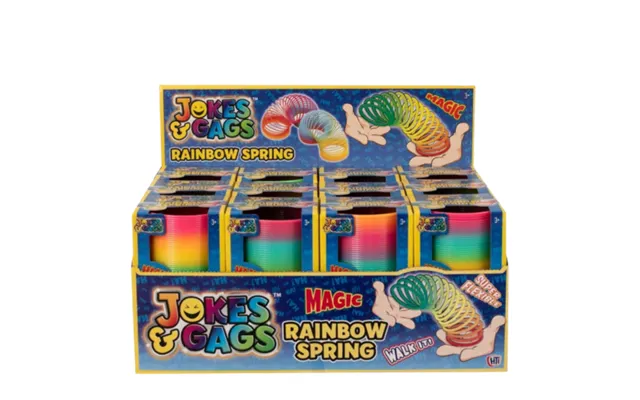
Plastic rainbow springs are the smile-makers of the spring world. They’re lightweight, flexible, and brilliantly colored—ideal for kids’ parties, classroom rewards, and casual play. Because plastic coils are softer than metal, they’re more forgiving if a child bends them briefly or handles them with less-than-gentle enthusiasm. Many come in compact sizes (around 2 to 3 inches in diameter), perfect for goodie bags or a desk drawer.
While plastic versions can still walk down steps, they typically need careful positioning and work better on smooth, uniform steps. If you’re choosing plastic for younger kids, look for thicker coil walls, rounded edges, and a diameter large enough to avoid finger pinches. Bonus points if it’s a BPA-free or phthalate-free plastic.
Want to dial the fun up to eleven? LED coiled spring toys add light and color to every bounce and twist. These are amazing for dim rooms, birthday surprises, or school assemblies where you want to grab attention fast. Some LED versions are built with small embedded lights that flash as the spring moves; others use glow materials that charge under light and shine in the dark. For maximum glow, pick brighter, lighter colors, and “charge” under a lamp for a few minutes before play.
Sure, screens are everywhere—but coiled springs invite hands-on discovery, the kind that sparks questions and smiles. Watching one “walk” is like seeing a physics diagram come to life. It’s tactile, visual, and kinaesthetic all at once. That makes spring toys perfect for classrooms, STEM clubs, sensory corners, and, yes, your coffee table. They bridge generations, too—grandparents and kids both recognize the charm instantly.
There’s also the pure, low-stress vibe. Coiled spring toys don’t need batteries, apps, or subscriptions. You wind, stretch, flip, and flow. The toy does the rest. It’s a rare blend of simplicity and depth, where a few minutes of play can relax your brain or inspire a mini science lesson on the fly.
With a coiled spring toy, you can show energy transfer, waves, momentum, and gravity—all with a flick of the wrist. Stretch the spring between two people and send a pulse to demonstrate transverse and longitudinal waves. Let it “slink” down a ramp to discuss friction. Compare a wider coil to a narrower one to explore stability and speed. Because everything happens right in front of you, kids absorb complex ideas without feeling like it’s “school.” That’s the secret sauce: fun first, learning second…and everyone wins.
Coiled spring toys offer soothing repetition and soft resistance, making them helpful for sensory play. The steady rhythm of walking a spring from one hand to the other can calm the nervous system, while the gentle feedback builds coordination. For kids (and adults) who crave motion or need a quick mental reset, a spring toy works like a pocket-sized movement break—easy to use, easy to share, and easy to love.
Stuck in a creative rut? A spring toy can be your desk-side muse. Rolling a compact coil back and forth, or letting it cascade between your hands, gives your brain a low-level task that melts stress and frees up mental space. It’s quiet, small, and—unlike clicky fidgets—won’t distract your coworkers. If you’re shopping for a desk, consider a metal spring with a sleek finish or a subtle matte plastic that won’t show fingerprints.
Choosing the “best” coiled spring toy depends on who’s using it and how. Think about the setting (stairs, classroom, office), the user’s age, and whether performance or playfulness matters most. A classic metal model might be perfect for stair tricks, while a rainbow plastic pack could be better for a party or classroom reward bin. Below are the features that make the biggest difference when you compare options.
Materials set the tone. Metal brings weight, glide, and longevity; plastic brings color, softness, and safety. For metal springs, look for smooth edges and consistent coil spacing. For plastic springs, choose sturdy, thick-walled coils that resist deforming under stress. Be wary of rough joins or visible seams, which can snag or twist more easily. If possible, choose a finish that resists scratches and keeps the spring sliding smoothly from step to step.
Size matters for both performance and safety. For reliable stair-walking, many people prefer a diameter in the 2.5 to 3.5 inch range. Smaller coils (around 2 inches) are great for small hands and party favors but may need extra care to walk steps cleanly. Larger “jumbo” models (4 inches and up) look impressive and can be easier for demonstrations because the movement is more visible from a distance. If you plan to stretch the spring across a table or between two people for wave experiments, check the maximum comfortable stretch length—typically a few feet—so you can avoid overextending and warping the coils.
For toddlers and younger children, choose a larger diameter with rounded edges and a softer coil to avoid pinches. Avoid very tight coil spacing that can trap tiny fingers. If you’re going for LED models, make sure any electronics are secure and not accessible to small children. As with any toy, adult supervision helps—especially on stair play—so the fun stays fun.
Stocking a classroom? Planning a birthday? Multi-packs of plastic rainbow springs offer high value at a low cost and make instant prizes or take-home gifts. Bundles of mixed sizes—mini, standard, jumbo—are also handy if you want to try different activities: minis for table fidgeting, standard for stairs, jumbo for eye-catching demos. Comparison shopping is your friend here; you’ll often find better per-unit value when you weigh multi-pack prices against single-spring listings.
Here’s where the magic really shines. Coiled spring toys can be a one-minute fidget or a full-on family challenge. They’re equally at home in a hallway, classroom, or office corridor. And yes, they’re even more fun when you invent your own rules.
Stair walking is the signature move. For best results, pick steps around 7 to 8 inches high with a smooth edge. Place the spring so one coil rests over the edge, then gently push the top. You’ll find a rhythm: too slow and it stalls; too fast and it topples. Try races with two springs side-by-side, or put sticky notes on steps as “checkpoints.” If you don’t have stairs, use a sturdy box as a two-step platform—same principle, smaller stage.
Turn your spring into a physics lab. Stretch it between two people about 2 to 4 feet apart and send pulses to explore wave behavior. Place it on a book propped at a gentle angle and time how long it takes to walk down, then change the angle to test how slope affects speed. Compare metal vs. plastic performance on the same surface. Try adding a small weight (like a binder clip) to the end of a metal spring to see how mass influences momentum. The results make great quick lessons—and unforgettable ones.
Need easy crowd-pleasers? Try “Longest Walk,” where players attempt the most steps without stopping. “Precision Pause” challenges kids to halt a spring exactly mid-step and hold it for 3 seconds. “Relay Coil” turns a hallway into a fun run: walk the spring down two steps, scoop it up, and pass it to the next teammate. For younger kids, use color-coded plastic springs to form teams—instant organization with extra cheer.
Even the most graceful spring can tangle if it’s jammed in a backpack or pulled beyond its comfort zone. The good news? A few simple habits keep coils clean, true, and tangle-free. Treat your spring like a musical instrument—respect the shape, and it’ll reward you with smooth performance.
Store your spring in its natural cylinder shape, not squeezed flat, and avoid wrapping it tightly around objects. After stair play, let it “rest” in a stack shape so the coils realign. Keep it away from extreme heat, which can warp plastic and soften finishes, and from gritty surfaces that can scratch metal. If kids are sharing one spring, set rules: one trick at a time, no tug-of-war. Little habits prevent big headaches.
A minor twist doesn’t have to be a disaster. First, resist the urge to yank. Instead, hold the spring upright and gently rotate the coils back into alignment, one loop at a time. If a single loop is flipped, slowly “walk” the flip around the circle until it exits at the edge, then smooth the stack with light pressure. For metal springs, work patiently; for plastic, apply even gentleness to avoid creasing. If the kink is severe, it may be safer to retire the spring rather than risk further damage—and possibly pinched fingers.
Love the feel of coiled spring toys but want variety? You’ve got options that scratch a similar itch: movement, physics, and stress relief packed into small, affordable gadgets. Related toys can complement your spring collection or offer alternatives for different settings, like quiet offices or science fairs.
Newton’s cradle brings equal-and-opposite reactions to life and doubles as a sleek desk accessory. Gyroscopes are mesmerizing gyros that resist your attempts to tilt them—great for stability demos. Fidget spinners offer a compact spin-based focus tool. They don’t walk down stairs (obviously), but they capture similar energy concepts in a smaller footprint. Pair a spring and a cradle to compare momentum in different systems; it’s a quick, engaging mini-lesson.
Magnetic rings slide and snap with a satisfying click, making them fun for dexterity and pattern play. Tangles provide a twistable, tactile loop that’s endlessly reconfigurable, perfect for quiet fidgeting. Puzzle cubes challenge logic and spatial reasoning—another smart desk toy with a learning edge. While these aren’t kinetic coils, they sit in the same “small, clever, hands-on” family that keeps minds busy and calm.
Coiled spring toys are widely available, and prices can vary by size, material, and pack quantity. The trick is to compare effectively—especially if you’re buying multiple units for a class, party, or team event. Comparing models side-by-side helps you weigh diameter, coil thickness, and value per unit, rather than getting swayed by flashy photos alone.
Instead of bouncing from one retailer to another, use a price comparison platform to see current offers in one place. A comparison site like ZoneOffer helps you scan deals, sizes, and pack options quickly across different sellers, so you can choose the coil that fits your budget and use case. It’s especially helpful if you’re deciding between metal vs. plastic or single vs. multi-pack purchases—you’ll see how the cost per unit changes at a glance.
Seasonal sales, back-to-school promotions, and holiday bundles often include coiled spring toys, LED variants, and mixed-size packs. If you need 20 or more springs for party favors or classroom kits, check multi-buy discounts; they can bring the per-spring cost down significantly. Also consider shipping thresholds when comparing—sometimes a slightly higher unit price with free shipping beats a cheaper listing with steep fees.
Coiled spring toys blend classic fun with real learning. Whether you’re reliving the stair-walking magic, stocking up for a classroom, building a sensory toolkit, or finding an elegant desk fidget, the right spring makes all the difference. Metal models deliver that premium glide and durability; plastic rainbow springs bring color, safety, and value; LED versions steal the show after dark. Compare materials, sizes, and packs, think about who will use them and where, and use a trusted comparison platform to make the smartest buy. Simple? Absolutely. Boring? Never. These spirals aren’t just toys—they’re tiny masters of motion, ready to turn everyday spaces into playful physics labs.