

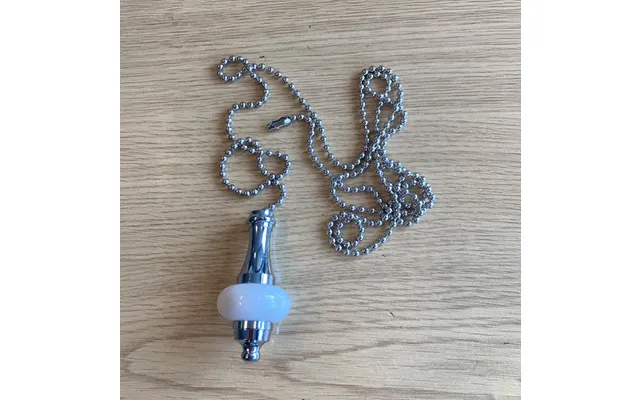
Pull Chains price list
Last updated Sunday, 18 Oct 2026
| Pull Chains | Price |
|---|---|
| Porcelain Light Pull | £9.99 |




Loading...
Last updated Sunday, 18 Oct 2026
| Pull Chains | Price |
|---|---|
| Porcelain Light Pull | £9.99 |
Pull chains are one of those tiny household details that quietly do their job—until they don’t. Whether it’s the soft click of a lamp or the satisfying swing of a ceiling fan chain, these small components make a big difference in usability and style. In this guide I’ll walk you through types, materials, installation tips, and smart alternatives so you can pick the ideal pull chain for any room in your home. Expect practical, hands-on advice with measurements in inches and feet so you know exactly what to buy and how to install it.
A pull chain is a simple mechanical switch operated by pulling a chain or cord to turn lights or fans on and off or to change settings. They’re common on ceiling fans, pendant lamps, and some vintage fixtures. But don’t be fooled by their simplicity—choosing the right chain affects safety, convenience, and the overall look of a fixture. Think of a pull chain like a doorknob: small, but it shapes your interaction with the whole house.
Beaded chains are the classic, most common type. They consist of tiny metal beads, often linked into lengths like 6 in, 12 in, 18 in, or 24 in, and are easy to trim down with basic pliers. They work well with a wide range of fixtures and are simple to replace when a link snaps or a connector fails.
If your fixture is a focal point, decorative pull chains offer more personality. These include porcelain knobs, crystal drops, wooden beads, or antique brass fobs. Decorative pulls are available in lengths from 6 in up to 36 in or longer, letting you customize both style and reach—handy if your ceiling is 9 ft or 12 ft high and the chain needs to come down to a comfortable 60 in or so above the floor.
Weighted chains include small weights—often 0.5 oz to 2 oz each—that help the chain hang straight and make pulling smoother, especially for heavy or stiff switches. These are perfect when a decorative tassel would otherwise swing wildly every time the fan cycles.
Conversion kits let you swap out a broken chain or change the pull style without rewiring. Extension chains add extra length—useful when replacing a short 6 in chain with a 30 in chain to reach lower. Most kits are universal and include connectors sized to fit standard bead chains.
Pull chains come in a wide range of materials and finishes, each with its own pros and cons. Common materials include brass, chrome-plated steel, nickel, porcelain, wood, and plastic. Brass and nickel are sturdy and age well, while porcelain and crystal add elegance but need more careful handling. Choose chain finishes like polished chrome or antique brass to complement fixtures—for example, a 4 in brass pull looks seamless on an antique-style lamp, while chrome suits modern fixtures. Also pay attention to chain thickness; thinner chains are lighter but may wear faster, whereas thicker links last longer but can look bulky.
Choosing the right pull chain is a balance of style, length, and practicality. First, measure your reach: if the light is mounted on a 10 ft ceiling, you might want a chain that lowers to about 60 in from the floor—typically a 5 ft chain or an extension. Next, decide on the pull weight—if your switch is stiff, a weighted chain (1 oz–2 oz) will help. Also consider how often the chain will be used; high-traffic fixtures benefit from metal chains, while occasional-use decorative lamps can get away with porcelain or crystal pulls. Finally, think about safety—avoid long cords in homes with young children and secure any dangling chains to reduce trip hazards.
Installing or replacing a pull chain is usually a simple DIY job that takes 10–30 minutes. Start by turning off the power at the switch or breaker. For most bead chains, you’ll need a pair of needle-nose pliers and a small flathead screwdriver. Open the light fixture cover or fan housing, locate the chain connector on the switch, and remove the old chain by releasing the connector clip or unscrewing a small nut. Attach the new chain to the switch connector and secure it. If you’re lengthening the chain, measure in inches and trim the chain using pliers so the final length brings the toggle within easy reach—typically 48 in–60 in above the floor for most rooms. If replacing a cord-style pull, be certain to use a connector rated for the fixture’s switch type. When in doubt, consult a licensed electrician—especially if any wiring needs changing.
Pull chains are low-maintenance, but they do need occasional attention. If the chain feels stiff, dust and debris may be gumming up the switch—try cycling it a few times or using a small brush to clean the area. Avoid soaking metal finishes; instead wipe with a damp cloth and mild soap. If a chain is slipping or the light flickers when pulled, the switch interior may be worn; replacement is often the simplest fix. For chains that frequently tangle, add a small weight or swap to a bead chain to reduce twisting. And if you notice exposed wire or a loose connector, turn off the power and either tighten the connector or replace the entire switch.
Ceiling fans often use two chains—one for speed and one for light. For fans that sit on a high ceiling, choose chains at least 24 in–36 in long so they’re easy to reach. For multi-speed fans, use a different pull shape or color to tell the speed switch from the light switch by feel—this is especially helpful in the dark.
Table and floor lamps typically need short chains—6 in–12 in—so they don’t dangle awkwardly over the shade. Pendant lights above kitchen islands or over counters might benefit from decorative pulls that match the fixture’s finish. Remember: for hanging pendants over counters, avoid excessively long chains that could snag or swing into plates and glasses.
In garages or utility rooms, durability matters more than looks. Opt for heavy-duty bead chains or cord-style pulls that withstand grease, dirt, and frequent use. Keep chains clear of moving equipment and position them at a height where they won’t get snagged—about 72 in from the floor is a common practical height in workspaces.
If you’re tired of manual pulls, consider modern upgrades like remote-controlled switches, smart bulbs, or pull chain-to-remote adapters. These adapters attach where the chain connects to the switch and let you control the fixture with a small remote—handy if you have high ceilings or limited reach. Smart bulbs replace the physical switch entirely, giving you app and voice control without changing any wiring. For rentals or historic homes where wiring upgrades aren’t allowed, adapters and smart bulbs are excellent, non-invasive options.
Pull chains are generally safe when installed correctly, but keep a few rules in mind. Don’t let long chains hang within reach of children—cords and loops can be strangulation hazards. Keep chains away from ceiling fans’ moving blades by maintaining a safe distance; the chain’s bottom should be several inches clear of any blade path. Use insulating materials if the chain is near bare metal or wiring, and always turn off power before attempting repairs. If you’re uncomfortable working inside a light fitting, hiring a pro is the smart move—spending a small amount now prevents expensive mistakes later.
Pull chains are inexpensive, but quality varies. Basic beaded chains and connectors are cheap and widely available, while decorative pulls and full replacement kits cost more. When comparing, look for build quality (solid brass, plated finishes), included hardware (connector clips, weights), and user reviews—these reveal how long a chain will stay shiny and functional. If you want to save time, comparison tools and review aggregates can help you find a well-rated chain for a given budget without visiting multiple product pages.
Ready to get crafty? Pull chains are perfect for upcycling. Swap in vintage keys, charms, or even small metal tools as pull toggles for an industrial loft vibe. String a short length of braided leather to give a boho twist to a pendant lamp. For a kid’s room, use a colorful acrylic pull in the shape of a favorite character. Just make sure decorative items aren’t heavy—keep the final weight under about 2 oz to avoid stressing the switch.
People often pick chains by looks alone, then find they’re too short, too long, or too fragile. Measure first: a common error is installing a pretty 6 in chain on a high ceiling where it’s unusable. Another mistake is ignoring weight; heavy decorative pulls may break older switches. Finally, don’t mix incompatible connectors—bead chain sizes vary, so confirm the connector type before trimming or attaching.
Accessory pieces like chain connectors and stoppers make installation easier and more reliable. Connectors join two chain lengths or attach the pull to the switch, while stoppers prevent the chain from being pulled out entirely. Weights improve pull action and prevent tangling. When buying accessories, check sizing—many connectors fit standard 2.4 mm bead chains, but some decorative chains use different diameters.
Pull chains are a small but impactful part of home lighting and fan systems. The right chain adds convenience, improves aesthetics, and extends the life of a fixture. Whether you choose a simple beaded chain for durability or a decorative porcelain pull for style, measure carefully, mind the weight, and follow safety best practices during installation. With a little attention, a pull chain swap is one of the quickest, most satisfying mini-upgrades you can do to refresh a room.