

Track Lighting Fixtures price list
Last updated Monday, 19 Oct 2026



View 6 Offers

Loading...
Last updated Monday, 19 Oct 2026
Think of track lighting as a Swiss Army knife for your lighting needs — flexible, sleek, and somehow always handy when you need precision or ambience. Whether you’re updating a kitchen island, spotlighting a gallery wall, or outfitting a commercial space, track fixtures let you direct light where it matters. In this guide I’ll walk you through standout products like the House Doctor long black track, Integral’s Focus Pro and Vector ranges, Astro’s spotlights, Kosnic Downlights, and practical suspension kits from JCC, while offering tips on installation, styling, and energy use so you can make a confident choice.
There’s more to track lighting than a single rail and a bunch of heads. You’ll find adjustable spotlights for focused beams, downlights and recessed pendants for a tidier look, robust high-bay linear modules for commercial areas, and suspension kits for islands and cafés. The selection spans finishes — black, bronze, white — and tech like plug-and-play Zhaga modules or GU10 sockets that make swapping bulbs painless. Below I break down the most practical models and where each one shines.
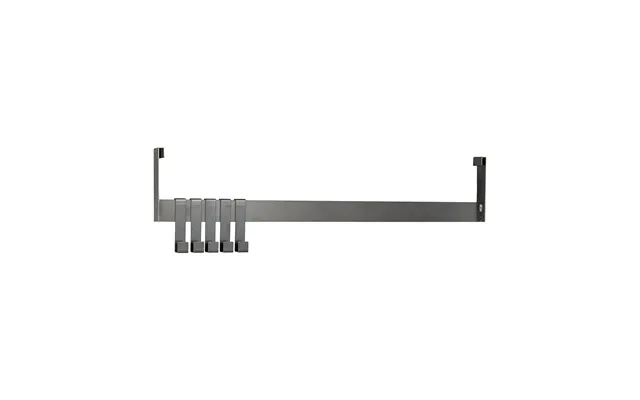
The House Doctor Track Light in black is a great pick if you want a minimalist long-rail statement. At roughly 33.7 inches long, it’s ideal for elongated spaces like a kitchen run or a compact dining bench. The black finish reads modern and unobtrusive, letting the light itself do the talking. Mount a few adjustable heads on this rail and you’ve got a designer look that’s also highly functional — perfect for task lighting and mood setting in one package.
For a small but mighty option, the Integral Focus Pro 8W LED in white, rated at about 3000K, serves up warm, inviting light while sipping energy. An 8-watt LED is great for accenting art, creating soft pools of light on counters, or lighting narrow corridors without glare. The white finish blends into pale ceilings and makes the heads less visually intrusive. If you want a cozy tone and precise control without a big energy bill, this is a solid choice.
If you prefer the simplicity of GU10 bulbs, the Forum Culina Ribalta track head in white is a familiar, flexible option. GU10 compatibility means you can choose from halogen-style spots or energy-saving LED GU10 bulbs, and swap them without changing the fixture. That flexibility is great for renters or anyone who likes upgrading bulbs for different beam angles and color temperatures over time.
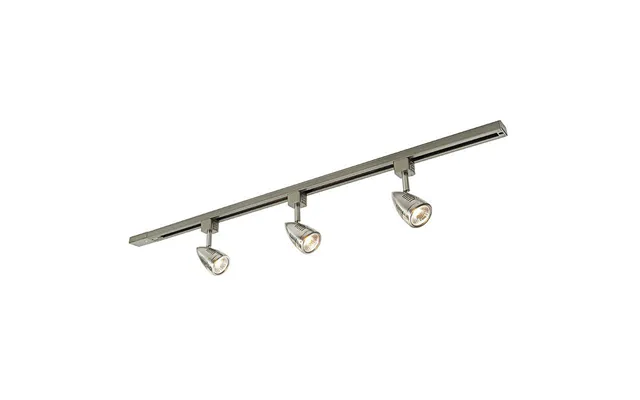
The Astro Ascoli four-bar bronze spotlight is a stylish multi-head solution that brings old-school cinema vibes to modern interiors. A four-head bar provides even coverage across a larger area and the bronze finish adds a warm, handcrafted touch. Use it above a breakfast bar or display shelf where a single directional head wouldn’t provide enough spread. Think of it as multiple spotlights on a single spine — practical and decorative.
When you need more punch, Kosnic’s Aloba Global 50W track downlight is built for task-heavy areas and open-plan rooms. At 50 watts with a 40-degree beam, it offers a tighter, more focused throw that’s great for highlighting countertops and display zones. In a 3000K finish it keeps a pleasantly warm tone while delivering brightness where it’s needed most — especially useful in kitchens, workshops, and retail shelving lines.
Astro’s Can 50 in matt black is a minimalist workhorse. The subdued finish helps the fixture recede into the background while a 50mm-ish can head (roughly 2 inches across in visible trim size) gives a neat, focused beam. It’s a good pick for contemporary rooms where you want the luminaire to be discreet but effective — hallways, feature walls, and small-scale galleries all benefit from this look.
For warehouse aisles, high ceilings, or any commercial space that demands high output, the Integral Vector Max Zhaga 18 plug‑n‑play linear high bay delivers serious lumen output at 80 watts. Zhaga-ready modules make maintenance simpler: swap a module instead of an entire fixture. If your project calls for bright, reliable illumination across large spans, this is the industrial-strength solution that keeps brightness consistent and service times short.
The Integral Ilnev033 Accentplus is an elegant hybrid — a recessed-look pendant that mounts to track systems and accepts GU10 bulbs. With a diameter of about 3.9 inches and a depth around 2.2 inches, it’s compact but offers a premium, finished aesthetic that sits flush in many interiors. It’s ideal where you want the neatness of recessed lighting but need the flexibility of track-mounted positioning.
Suspending track from a ceiling creates a dramatic look over islands and dining tables; JCC’s Mainline wire suspension kit provides about 6.6 feet of drop (roughly 79 inches) so you can hang tracks at the perfect height. Suspension kits are a simple way to add presence and bring light closer to work surfaces without invasive ceiling work — practical for retrofit situations or rooms with high ceilings.
For brighter residential or light-commercial needs, Integral’s Focus Pro 24W (available in a neutral 4000K) and JCC’s Starspot 3000 at 34W, 4000K, and a 38-degree beam provide stronger, cooler light for task-heavy spaces. A 24-watt LED can serve as a robust general light, while a 34-watt directional spot is excellent for accenting merchandise or focal features without washing out textures or colors.
Choosing beam angle and color temperature is like picking a lens for a camera: it affects mood and clarity. Narrow beams (around 38° or 40°) concentrate light for dramatic emphasis — great for art and countertop task lighting. Wider beams create softer, more even illumination. As for color temperature, 3000K provides a warm, inviting glow; 4000K is cooler and crisper, boosting contrast and focus. Match the beam and Kelvin to the task and style of the room: warm for lounges, neutral to cool for kitchens and workspaces.
Track systems come in a few flavors: single-track, three-circuit track, suspended rails, and recessed-mounted pendants. Surface-mounted tracks are the easiest for drywall ceilings; suspended kits like the JCC Mainline let you lower the track to the ideal working height. For recessed aesthetics, the Integral Ilnev033 Accentplus gives a near-flush look while staying track-mounted. If you’re not comfortable with wiring, call a qualified electrician — track wiring can be straightforward, but proper circuit allocation and secure suspension are critical for safety.
LED track heads such as Integral’s Focus Pro and JCC’s Starspot drastically cut energy use compared to older halogen spots. An 8W LED can replace a 35W halogen in many accent roles, while 24W–34W LEDs can substitute bulky 50W–75W halogens in task roles. Beyond wattage, LEDs last longer, reduce heat buildup, and often come with dimming compatibility. If you want to maximize savings, look for plug‑n‑play Zhaga modules or integrated LEDs with long-life ratings and good warranty coverage.
Think in layers: ambient light from general ceiling fixtures, task lighting from focused track heads, and accent light for art or architecture. Position tracks parallel to the longest wall or island for even spread. Keep spotlight heads about 6 to 8 feet back from the area you’re illuminating in residential rooms — that spacing gives a balanced wash without harsh hotspots. For galleries or retail, mount heads slightly off-axis to avoid direct glare in customers’ eyes while still highlighting objects.
Maintenance is painless if you plan for it. GU10 heads let you swap bulbs quickly; if you choose Zhaga or integrated LED, check replacement procedures so you don’t need to change an entire fixture later. Dust track rails and heads with a soft cloth regularly, and avoid abrasive cleaners. Keep spare bulbs on hand and note beam angles and Kelvin ratings when replacing to maintain consistent light quality across a run.
When comparing fixtures, balance aesthetics with specs: lumen output, beam angle, color temperature, mounting type, and compatibility with existing tracks are the big factors. For commercial projects, factor in serviceability — Zhaga modules or plug‑n‑play designs reduce downtime. For home buyers, look for dimming compatibility, finish options, and whether the heads are adjustable enough for future changes. A comparison approach keeps you focused on what matters instead of being swayed by looks alone.
Before you hit the “buy” button, measure the space, decide the visual profile you want, and map out where light needs to land. Check whether your ceiling requires surface mounting or suspension and confirm the track type (single-phase vs three-circuit) matches the heads you plan to use. Consider mixing finishes — black rails with bronze heads, for example — for intentional contrast. And remember: the right combination of beam angle, Kelvin, and head placement will transform the same fixture from harsh to heavenly.
Conclusion: Track lighting is a flexible, stylish, and efficient way to control light in any room. From compact 8W focus heads to 80W industrial linear modules, the market offers options to suit homes, studios, and commercial spaces alike. Match the fixture to the task, think about beam spread and color temperature, and don’t overlook practical details like mounting height and serviceability. With the right choices, track lighting can be both your room’s spotlight and its supporting actor.