
Router Tables price list
Last updated Friday, Sep 18, 2026





View 4 Offers
Loading...
Last updated Friday, Sep 18, 2026
If you love woodworking, a router table can feel like a magic wand. Instead of holding a router in your hands, you mount it upside down under a tabletop and use the router bit to shape edges, cut grooves, and make repeatable joinery with the stock running across the table. Think of it as turning your router into a tiny, highly precise factory — perfect for hobbyists, carpenters, and DIYers who want cleaner, safer, and more accurate results. Whether you’re trimming trim, making dados for shelves, or producing dozens of identical mouldings, a router table can speed up work and improve consistency.
Why would someone add a router table to their bench? First, it gives you better control and repeatability. When the bit is fixed and the workpiece moves, it’s easier to maintain even depth and consistent profiles. Second, a table setup improves safety: you use featherboards, push blocks, and fences to keep hands well away from the cutter. Third, it expands the range of tasks you can do — from precise joint cutting to template routing — and it makes many two-handed operations simpler. If you’re serious about joinery or want professional-looking edgework, a router table is one of the most useful upgrades for a small shop.
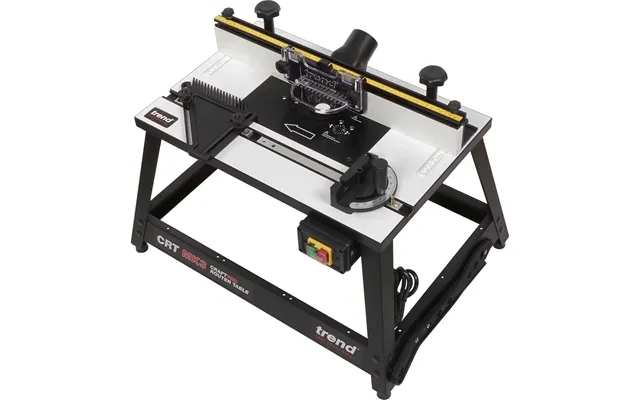
Router tables come in several styles: compact benchtop units, full-size standalone tables, and modular systems that allow you to swap inserts and lifts. Benchtop tables are great for small shops and often weigh between 15 lb and 45 lb, while full-size tables can be 24" to 48" wide and weigh 60 lb or more. Popular brands you’ll see compared across retailers include Bosch, DeWalt, Makita, Triton, Kreg, JessEm, and Bench Dog. Some users choose a dedicated table top and mate it with an aftermarket router lift for precise height adjustments, while others prefer a combo unit with built-in lifts and fences. Pick the style that matches your workspace, budget, and the kinds of projects you tackle most often.
When you’re comparing router tables, think about long-term usability. A sturdy fence that locks true, a flat tabletop that resists warping, and a reliable insert plate that doesn’t wobble are essential. Other features to prioritize include dust collection compatibility, room for large stock, smooth height adjustment for the bit, and modular components so you can improve the table over time. Also consider portability if you move around job sites; some benchtop tables fold or have quick-release features that make transport easier.
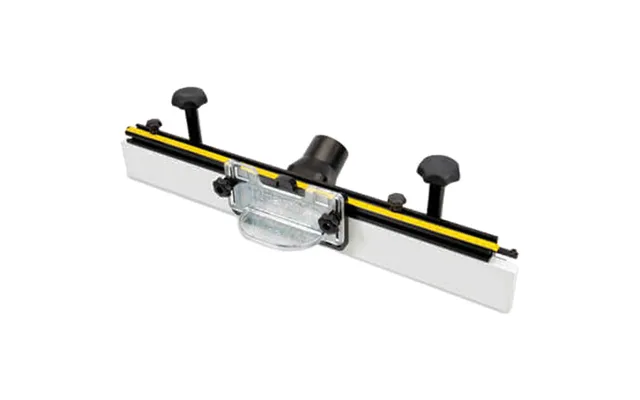
The fence is your guiding star. A good fence should be straight, easy to set square to the table, and allow micro-adjustments so you can dial in cut widths to a fraction of an inch. Many fences include flip-over faces for different operations and built-in dust chutes. Look for fences with T-slot or classic bolt mounting so you can add stops and featherboards. A well-made fence can make the difference between sloppy and precision work.
Tabletops are typically made from MDF, phenolic, aluminum, or laminated plywood. MDF gives a dead-flat surface for a budget price, while phenolic tops are more durable and slide-heavy stock smoother. Aluminum tops and cast iron plates can be very rigid and last for years. Size matters too: a 24" x 36" top gives you a comfortable work area for most projects, while hobby benchtops often run 18" x 24". Choose a table that lets you support the longest stock you commonly route — nothing worse than fighting sag during a long profile cut.
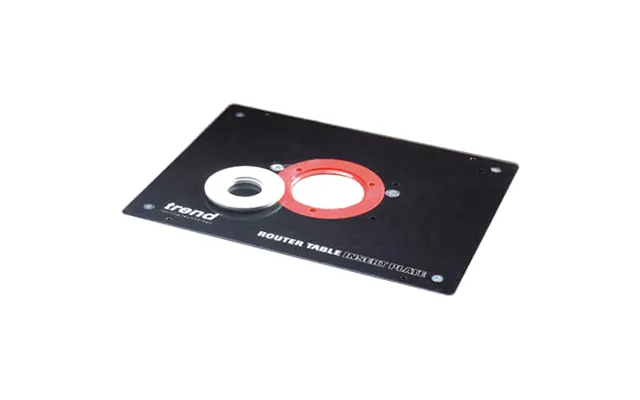
Quality insert plates are critical for accurate routing; a warped or loose plate spells unpredictable cuts. Many builds use a universal insert with shims to adjust for perfect flatness, but the premium route is a machined aluminum or phenolic plate that accepts direct mounting of a router or a router lift. Router lifts let you raise and lower the bit from above the table, which is invaluable for quick, precise height changes without crawling under the table. If you do a lot of repeatable work, a lift is worth the investment.
Router operations produce a fine, fast cloud of chips. Look for tables with an efficient dust port near the bit and behind the fence; many tables include a 2" or 2.5" port that hooks to a shop vac or dust extractor. Combine good extraction with featherboards, push blocks, and a splitter or zero-clearance insert and your cuts will be cleaner and safer. Remember: clear visibility plus dust control equals better accuracy and less time cleaning up afterward.
Miter gauges and T-slots increase the table’s flexibility. A miter slot lets you run jigs and sleds for crosscuts or angled work, while T-slots accept fences, stops, and hold-downs. Check the slot spacing and whether your favorite accessories fit the table out of the box. If you plan to build templates or sleds, a generous miter slot configuration will save you headaches down the road.
Accessories turn a good router table into a great one. Beyond fence and lift, think featherboards, push blocks, an assortment of router bit profiles, a set of router bit collets, zero-clearance inserts, and a solid miter gauge. Here’s a quick rundown of the must-haves and why they matter.
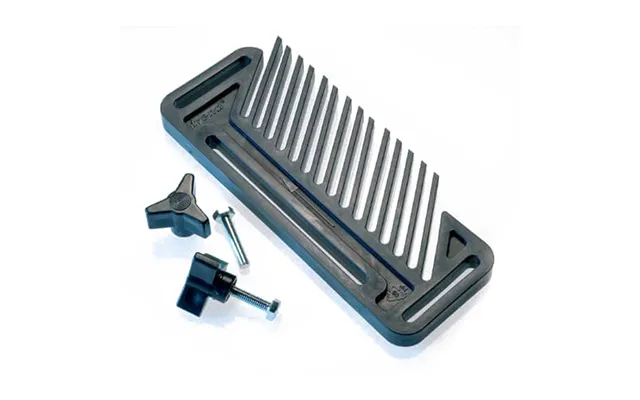
Featherboards keep stock pressed against the fence and table, preventing kickback and ensuring cleaner passes. Push blocks and pads put your hands safely behind the cutter while giving you firm control over thin or narrow pieces. These simple items are cheap, often weighing less than 1 lb apiece, but they dramatically boost safety and cut quality.
Your choice of router bits — straight bits, roundovers, rabbets, dovetails, and flush-trim bits — defines what your table can produce. Invest in a handful of high-quality carbide-tipped bits for the profiles you use most. Also ensure your router and table accept the collet sizes you prefer; many routers use 1/4" and 1/2" shanks, and 1/2" shanks reduce vibration for larger bits.
Zero-clearance inserts minimize tear-out by supporting the wood right up to the cutter edge. Splitters or anti-kickback devices prevent the cut piece from pinching the bit and being thrown. Both are essential when working with veneered plywood or delicate stock where tear-out is a constant worry.
An aftermarket lift can transform a basic table by adding fine height control and repeatability. Premium lifts can change bit height by a fraction of an inch with a single turn and often feature locking handles for stability. If your table accepts standard 6" or 7" insert rings, upgrading to a machined lift is a logical next step as your skills and needs grow.
Setting up a router table doesn’t have to be a ritual of trial and error. Start by flattening the tabletop and fitting the insert plate so it sits perfectly flush. Mount your router or lift and secure it; check the bit runout with a dial indicator if you have one, or visually look for wobble at low speed. Align the fence parallel to the miter slot and check that the table surface and fence are square. Install dust collection and test with a scrap piece to dial in bit height and fence position. Use featherboards and a push block, and always feed against the bit rotation for control. The first few cuts should be shallow; take light passes until you trust the setup.
Routine maintenance keeps cuts consistent and prolongs the life of both bits and table. Keep the tabletop waxed with paste wax for smooth stock feed. Check the insert plate for flatness periodically and shim if needed. Clean dust out of T-slots and the dust port to keep accessories moving freely. Inspect router collets for wear — a loose collet lets the bit wobble and shortens its life. Replace dull bits rather than forcing them; fresh carbide bits cut cleaner, faster, and safer. Finally, store sensitive accessories in low-humidity conditions to avoid warping or corrosion.
Prices vary a lot depending on size, brand, and features. Benchtop router tables often start around $80 and go up to $300 for a well-built model with a lift. Mid-range full-size tables with aluminum tops and decent fences can run $300 to $700. Professional standalone tables with machined inserts, integrated dust ports, and heavy-duty fences commonly fall in the $700 to $1,500 range. Accessories are priced separately: a decent router bit set might be $30 to $150, a quality router lift $150 to $400, and featherboards or push blocks usually cost $10 to $50 each. If you’re comparison shopping, filter by tabletop size in inches, fence type, and whether a lift is included; those are the features that drive the most value.
New users often take too deep a cut, rush setup, or skip featherboards. Take it slow: multiple light passes are safer and cut cleaner than one aggressive pass. Always test on scrap until you confirm bit height, direction of feed, and fence alignment. Don’t neglect bit sharpness or proper feed direction — feeding with the rotation instead of against it invites chatter and tear-out. Finally, double-check that dust collection is connected; beyond cleanliness, it helps visibility and reduces the risk of inhaling fine particles.
If your shop is small and you value portability, a benchtop table is a great starting point. They’re lighter — often under 40 lb — and can sit on a workbench when needed. If you make large cabinets, long mouldings, or do production work, a full-size table with a 36" or 48" top and robust fence system gives you much better support for long stock. Think about the largest project you’ll routinely tackle and let that guide your choice. A modest investment in a bigger table pays off when you stop fighting overhung work and gain consistent results.
Router tables are among the most transformative purchases a woodworker can make. They increase accuracy, improve safety, and expand the kinds of pieces you can build. Whether you go for an affordable benchtop or a full-size professional table with a machined lift, invest in a solid fence, a flat tabletop, and basic accessories like featherboards and quality bits. Shop with a clear list of must-have features — table dimensions in inches, dust collection compatibility, and whether a lift is included — and compare price ranges to match your budget and shop needs. With proper setup and a few simple safety habits, a router table will quickly become your go-to tool for repeatable, beautiful woodworking.