



All categories
Business & Offices
Electronics & Media
Fashion & Accessories
Groceries & Essentials
Health & Personal Care
Home & Living
Kids & Family
Sports & Outdoors
Search in ZoneOffer
Loading...
Believe it or not, cassette adapters are more than a nostalgic relic — they’re a practical bridge between old-school car stereos and today’s streaming world. If you own a vehicle with a working cassette deck, a cassette adapter can let you play playlists from your phone, tablet, or MP3 player without rewiring the dash. Think of it as giving your classic car a modern heart: simple, inexpensive, and often reversible. For anyone who loves the look and feel of an older interior but wants modern convenience, cassette adapters are a low-fuss solution.
A motor vehicle cassette adapter is a device shaped like a cassette tape that plugs into your car’s cassette deck and routes audio from an external source into the stereo. Inside, there’s either a wired connector or a wireless receiver that sends the signal to the deck’s magnetic read head. It’s straightforward: insert the adapter into the deck like a tape, connect your audio source, hit play, and the music comes out through the car’s speakers. It’s that easy — no dash modifications, no permanent changes, just plug-and-play convenience.
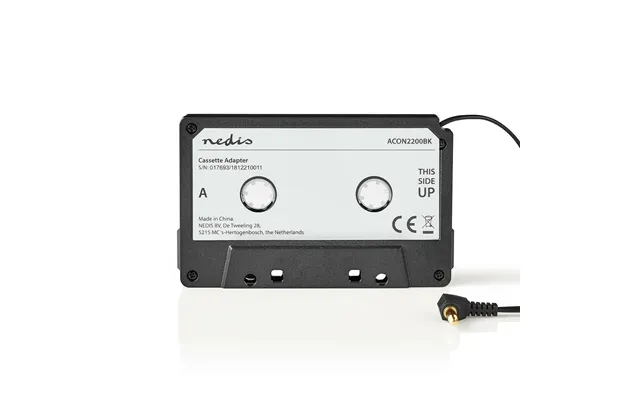
Passive adapters are the classic kind: a cassette-shaped shell with a cable that ends in an audio plug. The plug fits into the headphone jack of your device — usually a 1/8 inch plug — and the adapter mechanically transmits the signal to the deck. These are cheap, require no battery, and are reliable for basic use. The downside? They rely on the headphone output of your source device, so volume and audio quality depend on your phone or player.
Bluetooth cassette adapters add a wireless receiver inside the cassette shell. Your phone connects over Bluetooth, and the adapter plays the signal into the deck. This lets you keep your device in your pocket or mounted elsewhere without a cable. Many of these models include a small rechargeable battery, and some even feature hands-free calling. They’re a modern twist on a retro solution, offering convenience at the cost of slightly higher price and the need to recharge occasionally.
FM adapters combine the cassette form factor with an FM transmitter, broadcasting your device’s audio to a short-range FM frequency that the car radio receives. This can be handy if the cassette deck is unreliable or if you want to jump between cassette and radio quickly. FM solutions vary in audio quality and are subject to local radio interference, so they’re best used in areas with clear, unused FM channels.
Choosing the right adapter comes down to a handful of practical questions: Does your device have a headphone jack or only Bluetooth? Do you want hands-free calling? How much are you willing to spend? If your phone still has a 1/8 inch jack, a simple passive adapter is the cheapest and most dependable choice. If you prefer wireless convenience, look for a Bluetooth adapter with a decent battery life and solid reviews for connection stability. Always check length of the cable (if present) — you want enough slack to place your phone comfortably without putting strain on the plug.
Installing a cassette adapter is usually a two-step process: insert the adapter into the cassette deck and connect the audio source. For wired adapters, be gentle when inserting and removing the adapter to avoid bending the plug or stressing the cable. If you experience low volume or poor sound quality, try increasing the volume on the source device before cranking the car stereo; cassette decks often need a stronger input to perform well. For Bluetooth models, keep the adapter charged and within a few feet of your phone during pairing to prevent dropouts. If the deck won’t accept the adapter, a quick inspection for debris inside the cassette slot or a gentle clean may help — but don’t force anything into the mechanism.
While cassette adapters are ideal for many owners, there are other ways to modernize older car stereos. Each option has trade-offs in cost, installation complexity, and permanence.
If your stereo has an auxiliary input, a direct cable is the simplest route. A 1/8 inch (also called 3.5 mm in other contexts) cable runs from your device straight to the stereo for clean, low-latency audio. This option requires the car stereo to have that AUX jack, which many older units don’t. When present, however, it often gives better sound than a cassette adapter because it bypasses the deck’s mechanical read head.
Some modern upgrades include USB interfaces that handle audio playback and charging. These are common in aftermarket head units and are a great choice if you want to charge while you play. For older cars, dash kits can replace the whole stereo to add USB, Bluetooth, and other features, but that’s a more permanent project that will change the look of your dashboard.
For a cleaner wireless experience without relying on the cassette deck at all, consider a dedicated Bluetooth car kit. These can connect to the existing speaker wires or replace the head unit entirely. They offer advanced features like Bluetooth calling, voice assistant integration, and better audio codecs for improved sounding music — but installation can get technical if you’re not comfortable working with car wiring.
To squeeze the best sound out of a cassette adapter, treat it like any weak link in an audio chain. Keep cable connections clean, use the freshest battery or keep the adapter charged, and set your phone’s volume to around 70–80 percent before increasing the car stereo output to avoid distortion. Avoid long, tangled cables that act like an antenna for interference. If you’re using Bluetooth, pick a frequency environment with minimal competing signals; crowded parking garages and busting radio stations can create interruptions. Think of the cassette adapter as a translator: the clearer you speak into it, the clearer the car speakers will respond.
When shopping for a cassette adapter or an alternative, look for these attributes: sturdy build quality, reliable connectors, proven battery life (for wireless models), and good customer feedback about audio clarity. Some adapters come with extra features like a built-in microphone for hands-free calls or clips to attach the cable neatly. For owners of classic cars who want to preserve originality, a reversible cassette adapter that leaves no trace after removal is often the best pick.
If your cassette deck is in an older ride, taking a little care will keep it performing well with adapters. Avoid leaving tapes or adapters in the deck when not in use — heat trapped in a closed garage can make plastic warp over time. Clean the heads occasionally with a head-cleaning cassette, and use a gentle brush or compressed air to clear dust from the slot. If the deck eats tapes or makes grinding noises, that’s a warning sign — it might need servicing. Regular light maintenance extends the life of the stereo and ensures any adapter you use will work reliably.
Want a layered approach? Use a cassette adapter alongside other upgrades like a dash-mounted phone holder, a USB charger for continuous power, and a compact Bluetooth receiver for in-car calls. That gives you the convenience of hands-free operation while keeping the retro look. Installing a small shelf or clip near the ashtray or glove box can keep devices out of sight but in easy reach. The idea is to create a setup that’s as modern or as vintage as you like — mix-and-match is the name of the game.
Most cassette adapters are inexpensive compared to full stereo replacements. If you’re keeping the car’s original dash for authenticity or budget reasons, an adapter buys you years of modern functionality at a small price. Even Bluetooth-enabled cassette adapters usually cost a fraction of replacing the head unit, and they’re reversible if you ever want to restore the car to original condition. For anyone balancing cost, style, and convenience, the value proposition is clear: adapters are a cost-effective, low-risk bridge to modern audio.
There are a few myths floating around about cassette adapters. One is that all cassette adapters will ruin your deck — not true if you use them properly. Another is that wired adapters always sound better than Bluetooth; while wired does avoid some wireless latency and compression, modern Bluetooth codecs can be perfectly acceptable for casual listening. Finally, some people assume cassette adapters are fragile. While cheap models can be flimsy, many well-made options are robust and designed for regular use. Use common sense, and treat the device with care.
If you want to elevate the experience further, pay attention to the source material and volume settings. Compressed streaming services may introduce artifacts that become noticeable through older car speakers, so choose higher-bitrate streams when possible. Equalizer settings on your phone or the car stereo can help balance bass and treble, especially in small cabins where low frequencies can boom. Lastly, take advantage of short trial periods or return policies from sellers so you can test an adapter in your specific car and make sure it meets your expectations.
Safety first: set up your device and pair Bluetooth before you start driving. Don’t fiddle with cables or menus while behind the wheel. If you need to change tracks or adjust volume, use steering wheel controls if your car has them, or pull over safely. For hands-free calling, ensure the adapter’s microphone picks up your voice clearly; if it doesn’t, use a separate headset or pause driving to take the call. Treat the adapter as an accessory, not a reason to compromise safe driving practices.
Comparison platforms and electronics marketplaces often list a variety of cassette adapters alongside reviews and price tracking. Look for sellers that show clear product specifications, decent return windows, and customer feedback that addresses your particular vehicle model. Seasonal sales and clearance events are good times to snag Bluetooth models at a discount. If you’re restoring a vintage car, specialty audio shops sometimes carry higher-end adapters built with durability in mind.
Compatibility doesn’t have to mean compromise. Motor vehicle cassette adapters let you enjoy modern streaming and hands-free features while preserving the classic dashboard that gives a car its character. Whether you choose a simple wired tape, a rechargeable Bluetooth adapter, or a hybrid FM solution, these devices are small investments that deliver big convenience. They’re the perfect example of clever engineering marrying old and new — a gentle reminder that sometimes the best upgrades are the ones that keep the soul of the car intact.
Conclusion: If you love the aesthetic of an older stereo but crave modern playback, a cassette adapter is a practical, budget-friendly bridge. With options ranging from bare-bones wired models to feature-rich Bluetooth units, you can choose the level of convenience and audio quality you want. Use the tips above to pick the right adapter, maintain your deck, and enjoy your music safely on the road.
| Motor Vehicle Cassette Adapters | Price | |
|---|---|---|
| Nedis Car Mp3 Cassette Adapter With 3.5 Mm Male Connector - Black | £ 7,83 |

