


Personnel Lifts price list
Last updated Monday, 19 Oct 2026



Loading...
Last updated Monday, 19 Oct 2026
Personnel lifts are purpose-built platforms designed to raise one or more operators safely to elevated work areas. Think of them as your secure, steady “elevator on wheels” for maintenance, installation, stock picking, or fit-out tasks. Instead of juggling ladders and balancing acts, a personnel lift gives you a stable deck, guardrails, and controlled movement, so you can work faster and with far less risk. Whether you’re changing lights at 18 ft, picking inventory at 25 ft, or inspecting ductwork at 30 ft, the right lift turns tough overhead jobs into simple, repeatable routines.
In the UK, personnel lifts span compact low-level access platforms up to tall, rugged boom lifts for complex outdoor work. You’ll find electric push-arounds, self-propelled vertical mast lifts, indoor-friendly scissor lifts, and articulating booms with impressive up-and-over reach. The best part? You can easily compare popular offers from multiple retailers and hire companies through a comparison site, helping you weigh specs, pricing, and availability side by side without the runaround.
Different jobs favor different machines, and understanding the main types is half the battle. Broadly, personnel lifts fall into four buckets: vertical mast lifts, scissor lifts, boom lifts (articulating and telescopic), and low-level access platforms. Each has its sweet spot. Need tight turning in narrow aisles? There’s a lift for that. Want straight-up height with a big platform? There’s a lift for that too. Let’s break down the strengths of each so you can narrow your shortlist with confidence.
Vertical mast lifts are the nimble champions of indoor maintenance and warehousing. Push-around models are compact and light, often squeezing through 30 in doorways and rolling into elevators. Self-propelled versions add powered drive, making them perfect for long shifts across large facilities. Typical platform heights range from about 12 ft to 32 ft, with working heights about 6 ft higher. You’ll love the small footprint, tight turning radius, and ease of setup—roll in, raise up, get it done.
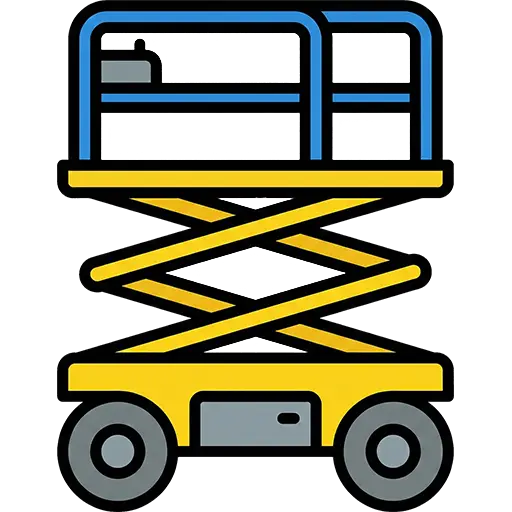
Scissor lifts shine when you need vertical reach and room to move. They lift straight up, offering wider decks for tools, materials, and multiple operators. Entry-level electric scissor lifts commonly reach around 19 ft to 26 ft, while larger rough-terrain models can tower far higher. Many scissor platforms extend with slide-out decks to give you an extra 2 ft to 3 ft of reach. If your daily tasks involve ceiling work, ducting, M&E installs, or signage, a scissor lift’s stability and payload make the work feel almost effortless.
Boom lifts deliver the reach that straight-up platforms can’t. Articulating booms bend around obstacles like mezzanines or pipework, while telescopic booms extend out for long horizontal reach. They cover serious distance—think platform heights from roughly 30 ft to well over 80 ft on larger machines. While many booms are diesel-powered for outdoor sites, smaller electric or hybrid units are increasingly common for low-emission indoor or mixed environments. If you need to get up and over a roof edge or around truss systems, a boom lift is your precision tool.
Low-level access platforms replace ladders for safer, quicker indoor tasks up to about 13 ft working height. These solutions are light, compact, and easy to reposition—ideal for offices, retail floors, schools, healthcare sites, and libraries. They may look modest, but they slash setup time, reduce fatigue, and cut risk dramatically compared to step ladders. If your team is constantly reaching for ladders, moving to low-level access is a simple upgrade that pays back in safety and productivity right away.
Comparing personnel lifts can feel overwhelming, but a few specs do the heavy lifting in your decision. Focus on platform height (and working height), weight capacity, platform size, power source, machine dimensions, turning radius, and floor loading. Add in safety systems, wind ratings, and gradeability for a complete picture. Once you’ve matched specs to your daily tasks and site constraints, comparing popular offers becomes quick and logical—you’ll instantly spot which models deliver the most value.
Platform height is the distance from the floor to the deck; working height is typically platform height plus about 6 ft (assuming a standing operator). If your ceiling is 24 ft and you need to reach cable trays at 22 ft, a platform height around 16 ft to 20 ft likely does the trick. Always allow a comfortable margin—fighting for inches is no fun at 20 ft up. Also consider obstacles: boom lifts may need extra reach to clear parapets or beams, while scissor lifts excel in straight-up spaces.
Payload matters. If you carry tools, fixtures, and materials, a capacity of 500 lb to 1,000 lb can be a game-changer. For many maintenance tasks, 500 lb is plenty for one operator and kit. For install crews or heavier gear, step up to higher capacities. Deck size also affects workflow: a larger deck (say 30 in by 60 in or more) gives room for parts bins, cable reels, and power tools. If you need to reach across, look for extendable decks on scissor lifts for an extra 2 ft to 3 ft of usable space.
Electric lifts dominate indoors thanks to low noise and zero local emissions. Battery tech has improved, with many units lasting a full shift on a single charge. For frequent, heavy-duty use, check amp-hour ratings and onboard chargers. Diesel or dual-fuel options suit outdoor jobs where range, gradeability, and rough terrain matter. Hybrids can offer electric operation indoors and engine power outside—handy if your projects straddle both worlds. Match the powertrain to your environment and your schedule.
If you’re navigating tight corridors or narrow aisles, machine width and turning radius can make or break your plan. Some vertical mast lifts are under 30 in wide and pivot on a dime. Scissor lifts vary widely in width, so measure your pinch points. For mezzanines or suspended floors, floor loading and total machine weight are crucial—never guess. A lighter push-around lift might be safer on delicate floors compared to a heavier self-propelled scissor. When in doubt, consult a structural engineer and the lift’s technical manual.
Look for robust guardrails, non-slip decks, pothole protection, tilt sensors, and emergency lowering systems. Proximity alarms, motion beepers, and flashing strobes improve visibility in busy warehouses. Compliance with UK regulations like PUWER and LOLER is essential, and many equipment specs reference widely recognized safety standards. Bottom line: the smartest upgrade is the one that keeps people safe without slowing them down. Strong safety features pay off every single shift.
When should you ditch ladders and scaffold towers? If you’re doing repeated overhead tasks, a personnel lift usually wins on speed, safety, and ergonomics. Ladders are slow and risky for anything beyond quick, light tasks. Scaffold towers are stable but time-intensive—setup and teardown eat into the day. A lift lets you roll into position, elevate in seconds, and work from a guarded platform with tools at hand. Over a week of repetitive tasks, the time savings add up, and so does the reduced risk of falls.
Match the lift to your environment. Indoors, you want compact size, non-marking tires, quiet operation, and zero local emissions. Outdoors, you need traction, stability, weather tolerance, and power. Also think about transitions—thresholds, slopes, ramps—and how the machine handles them. If your team moves between warehouses and loading yards, a versatile machine (or a mixed fleet) keeps you covered without juggling compromises.
Non-marking solid tires are perfect for polished concrete floors, while foam-filled or rough-terrain tires handle gravel, asphalt, and uneven ground. If you’re outside on job sites with mud or loose stone, aim for rough-terrain scissor lifts or booms with 4-wheel drive and higher ground clearance. Indoors on smooth floors, choose lighter, more compact models to protect surfaces and maximize maneuverability. It’s amazing how much traction and tire choice affect your confidence at height.
Wind matters. Many scissor lifts and mast lifts have limited wind ratings and are intended for indoor use only. Outdoor-rated models specify maximum wind speeds—pay attention and respect those limits. Gusts can be unpredictable at 30 ft up. For booms and tall scissors used outdoors, check wind rating in mph and consider adding ballast or selecting heavier-duty models when working in exposed areas. Rain and cold can affect traction and battery performance, so plan charging and ground conditions accordingly.
If you need a lift for a short, defined project, hiring is usually the simplest route. For ongoing maintenance or frequent use, buying new (or used) can be more cost-effective over time. Leasing spreads the cost and may include maintenance packages—great for budgeting. Not sure? Compare total costs across durations. A comparison site makes it straightforward to balance day rates, weekly rates, and purchase prices across multiple providers, so you can follow the numbers, not hunches.
New lifts bring warranty coverage, the latest safety tech, and predictable reliability. Used lifts can be a bargain, especially if they’ve had light duty and solid maintenance. Refurbished units sit in the middle—often reconditioned with fresh batteries, new tires, and thorough inspections. When comparing, look at age, hours of use, service records, and parts availability. A well-kept, five-year-old scissor lift with low hours can deliver great value if you verify its history and performance.
Start with the basics: check guardrails, platform gates, controls, and emergency stops. Inspect hydraulic hoses for leaks, look for cracks or rust in the scissor stack or mast, and examine tires for flat spots. Test lift and drive functions through full ranges. For electric models, review battery health: age, charge retention, and charger condition are critical. Ask for LOLER certificates and maintenance logs. A methodical inspection guards against surprise downtime and helps you negotiate a fair price.
Personnel lifts are everywhere once you start noticing them. They keep facility teams efficient, installers on schedule, and retailers agile. From factories and warehouses to theaters and event venues, the right lift not only boosts productivity but also improves safety culture. The result? Fewer incidents, less fatigue, and more jobs finished on time, every time. Here are some popular scenarios where these platforms shine.
For lighting, HVAC, sprinklers, cable trays, and racking inspections, vertical mast lifts and electric scissors are the go-to tools. Their compact size fits crowded aisles, and non-marking tires keep floors pristine. Need to pick items at 20 ft? A small scissor lift with a 500 lb capacity handles people and parts with ease. The faster you can set up and elevate, the more tasks you can tick off before lunch—no ladders, no drama.
On build sites and interior fit-outs, speed and flexibility rule. Articulating booms reach over obstacles to place installers exactly where they need to be, and rough-terrain scissors carry materials across uneven ground. For M&E contractors, swapping between an indoor scissor and an outdoor boom keeps projects on track. Add in hybrid or dual-fuel models when you need quiet operation inside but extra muscle outdoors. The right mix minimizes downtime and maximizes crew output.
In retail, events, and entertainment venues, low-level access platforms and small mast lifts are heroes. They slip through tight backstage areas, roll across delicate floors, and reach signage, lighting rigs, and displays without the risk of ladders. Quiet electric power keeps noise down during rehearsals or off-hours refreshes. Want to rehang lights at 18 ft on a tight turnaround? A compact platform elevates you in seconds so opening times stay on schedule and the show goes on.
Great equipment is only half the safety story; training and habits seal the deal. Ensure operators are trained for the specific lift type they’ll use, not just “something similar.” Build pre-use checks into the daily routine—five minutes spent verifying controls, guardrails, and tilt alarms can prevent a day of downtime. Keep work zones tidy, mark off lift areas, and never push wind or load limits. Safety isn’t paperwork; it’s a repeatable system built into each shift.
Before elevating, walk around the machine. Look for fluid leaks, damaged components, loose bolts, worn tires, and bent rails. Test controls at ground and platform stations, confirm emergency lowering works, and check the tilt sensor. Verify batteries are charged and chargers are correctly stowed. On booms and large scissors, inspect harness anchor points and ensure decals and capacity plates are legible. The aim is to catch small issues before they become showstoppers.
Operators should understand safe setup, platform loading, and emergency procedures. For boom lifts, a full-body harness with a short lanyard attached to an approved anchor point is standard practice—don’t skip it. Teach spotters how to guide machines through tight areas and what to do if the platform stops midair. Clear, consistent training builds confidence, reduces errors, and helps crews work efficiently without cutting corners.
Total cost is more than the sticker price. Consider downtime risk, battery replacement intervals, tire wear, charger upgrades, and scheduled inspections. Electric models may cost less to run day-to-day, while diesel rough-terrain units earn their keep on challenging sites. Hiring rates vary by height, capacity, and availability, so comparing multiple offers pays. Keep an eye on delivery and collection fees too—those add up. A clear-eyed cost comparison helps you choose what’s best for your workload and budget.
Hopping between multiple sellers and hire firms eats time. A comparison site pulls popular offers into one place so you can scan platform heights, capacities, and prices at a glance—no endless phone calls, no spreadsheet chaos. You can assess new, used, or hire options side by side, filter by specs, and zero in on value fast. Remember, ZoneOffer is a comparison platform, not a store, so you can explore choices from different providers and pick the fit that meets your safety standards, timeline, and budget.
Personnel lifts elevate safety and productivity, whether you’re changing lamps in a gym, installing ductwork on a fit-out, or maintaining warehouse racking. Start by matching lift type to your job: vertical mast for tight spaces, scissors for straight-up work and deck space, booms for reach and obstacles, and low-level access to ditch ladders. Compare platform height, capacity, footprint, and power source, then weigh ownership against hiring. With a smart spec checklist and the right comparison tools, you’ll land a reliable, safe lift that pays you back every shift.