

Diodes price list
Last updated Monday, 19 Oct 2026





View 8 Offers

Loading...
Last updated Monday, 19 Oct 2026
When most people think of diodes, they picture tiny, unassuming components. But here’s the twist: those little one-way valves for electricity are the unsung heroes behind modern lighting, smart control systems, and energy efficiency. From LED strips that wash a room in color to rugged, weather-sealed setups for patios and shopfronts, diodes sit at the heart of it all. If you’re scanning popular offers and price comparisons for LED strips, dimmers, connectors, and programmable timers, you’re already in the right lane. Let’s break down the standout products you’ll see featured often—plus the tech behind them—so you can shop with confidence and build a reliable, great-looking setup.
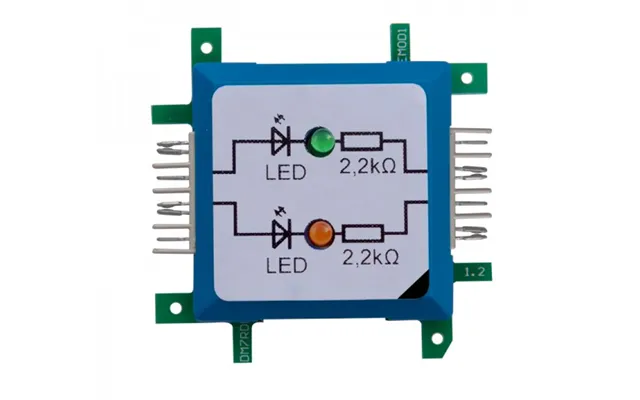
A diode lets current flow in only one direction. That sounds simple, but it unlocks everything from AC-to-DC conversion and surge protection to the very light output of LEDs (light-emitting diodes). In lighting, an LED is a semiconductor diode that emits photons when current passes through it. Get polarity wrong? The circuit won’t work. Use the right diode type and current control? You’ll enjoy bright, efficient light with long life. Diodes also appear as rectifiers in power supplies, as Schottky parts in low-loss circuits, and as transient-voltage suppressors guarding your gear. In short, diodes are the gatekeepers of clean, safe, and consistent lighting performance.
Looking through today’s lighting and electronics deals, you’ll notice a strong focus on LED ecosystems—especially accessories that make installs faster, cleaner, and smarter. Think corner connectors for tidy turns, IP-rated kits for weather protection, RGBW strips for rich color plus crisp white, dimmer switches with smooth low-end control, and digital programmers that choreograph your lighting schedule. Let’s take a closer look at some notable items you’ll commonly find featured and compared.
If you’re installing LED strips where dust, moisture, or the occasional splash is a concern, an IP65 kit is a lifesaver. IP65 means the setup is dust-tight and protected against low-pressure water jets. Translation? Great for covered patios, bathrooms (in appropriate zones), or busy kitchens. Many single-color high-uniformity strips are fairly slim—often around four-tenths of an inch wide—so a compatible IP65 kit helps protect the strip and preserve that seamless, dot-free look. Add proper sealing and you’ll boost longevity without sacrificing visual quality.
Ever tried to bend an RGB strip around a sharp corner? It’s a recipe for damaged pads and unreliable connections. A flat-bend L-shaped corner with four pins (one for each RGB channel plus common) lets you pivot around corners cleanly. The result: quicker installs, stronger mechanical integrity, and crisp right angles in under-cabinet runs, shelving, and display cases. You’ll also save soldering time and reduce the chance of cold joints or intermittent flicker.
When your project needs scheduling—think security lighting, retail displays, or timed ambience—a 2-channel digital programmer steps in. Two channels mean you can control separate circuits independently. Set weekday/weekend schedules, holiday modes, or daily on/off routines that just work. It’s like putting your lighting on autopilot, with the added bonus of saving energy by eliminating “oops, I left the lights on” moments.
A modern, stylish dimmer can transform both the look and feel of a room. A 1-gang, 2-way 100W LED dimmer is ideal for many residential circuits, offering smooth dimming, reduced flicker, and compatibility with quality LED drivers. The 2-way function lets you control the same circuit from two locations—handy for hallways, staircases, or large rooms. The matt black finish also plays nicely with design-led spaces, giving you clean lines without reflective glare.
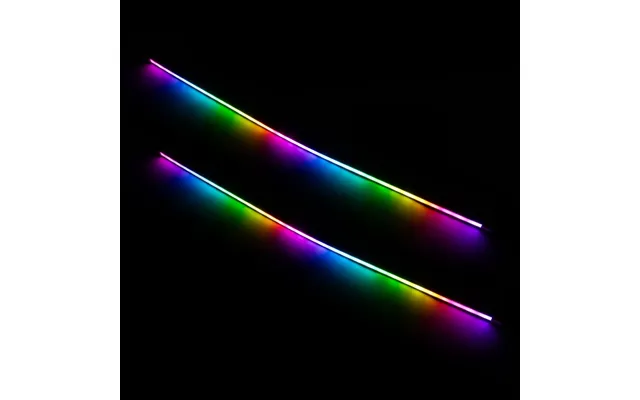
RGBW strips add a dedicated white channel to standard RGB, which makes whites cleaner and pastels more accurate. A neutral 4000K white is balanced—neither too warm nor too cool—so it’s perfect for working areas, kitchens, and studios. IP20-rated reels are meant for dry, indoor use, and the extended reel lengths you’ll typically see can cover long coves and continuous runs across rooms. You’ll enjoy vivid color for mood lighting and a proper white for tasks—all from one strip.
Need flexibility in light output and color temperature? A multi-wattage, CCT-adjustable (Correlated Color Temperature) LED module lets you dial in both brightness and white tone during install. That’s incredibly useful for retrofit fixtures, communal areas, and properties with varying needs. You can fine-tune to a warm ambience for lounges or a crisp, neutral white for offices—without swapping hardware.
CCT (tunable white) strips use two white channels—typically warm and cool—that blend to your chosen shade. These connectors with short leads are built to make those joins painless. A pack of five covers multiple runs or gives you spares for future tweaks. If you prefer to avoid soldering, these are a no-brainer for fast, consistent results.
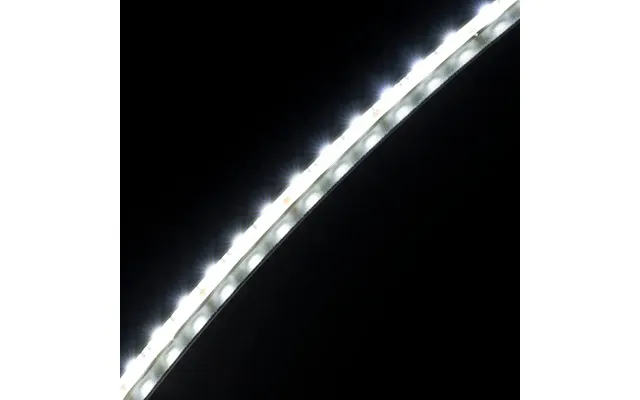
COB (Chip On Board) strips pack LEDs densely behind a phosphor layer, giving you a beautifully continuous line of light with virtually no visible dots. Pair that with an IP65 rating and you’ve got a classy, uniform finish that can handle more demanding environments. Neutral white is versatile, making it ideal for work surfaces, vanities, or retail shelving where color accuracy matters.
End caps finish your aluminum profiles cleanly, keeping dust out and hiding sharp edges. A “without cable entry” design is perfect for the far end of a run, where you just want a neat termination. It’s a small detail that elevates the entire install—like putting a frame on a painting.
For workshops, public areas, or rentals, a key-lockable, double-pole socket adds safety and control. Double-pole switching isolates both live and neutral, and the key lock helps prevent unauthorized use. The neon indicator is a straightforward visual cue that power is live. Design-wise, the black nickel with black insert complements modern decors and matches well with other matte or dark finishes.
Digital pixel RGB (addressable) strips let you animate patterns, gradients, and chasing effects. They require more precise data and power connections, so using purpose-built connectors with short leads helps maintain signal integrity. If you’re building signage, an accent wall, or a gaming room feature, these connectors speed up install and reduce headaches.
With so many options, how do you narrow it down? Start by defining your environment (dry vs. damp), your lighting goal (task vs. ambient), and your control plan (manual dimmer, smart programmer, or both). Then, match the gear to the job. Don’t worry—we’ll walk through the key choices so you can avoid the “buy twice” trap.
Use IP20 for dry, indoor locations—think coves, shelves, living rooms, and office ceilings. Step up to IP65 for areas exposed to dust or low-pressure splashes, such as covered patios, bathrooms (where permitted), and busy kitchens. An IP65 kit for your strip is like a raincoat: you may not always need it, but you’ll be glad you have it when the weather turns.
RGB creates millions of colors, great for mood lighting and accent effects. RGBW adds a dedicated white channel for cleaner whites and better pastels. If you mostly want excellent white light with the option to tune warmth, go CCT (tunable white). A neutral 4000K white is a safe middle ground—bright and clean without feeling clinical.
For daily routines and energy savings, a 2-channel digital programmer is terrific—you can schedule exterior and interior lights separately. A 100W LED dimmer switch provides manual, instant control, perfect for rooms where you might tweak brightness on the fly. Don’t forget the power source: choose a reliable constant-voltage driver sized for your total strip wattage, with headroom to spare.
Good planning beats good luck. Before you peel a single adhesive backing, map your run, pick your connectors, and identify where you’ll hide drivers and junctions. A little prep will save you time—and spare your nerves.
Measure your spaces in feet and add a little extra for corners and transitions. For long coves or perimeter lighting, aim for reels that can cover long distances—roughly one hundred to one hundred sixty-five feet is common for extended runs. If you need only shorter lengths, consider cutting sections and saving the rest for future projects.
Solderless connectors are great for speed and consistency, especially for right-angle turns or quick joins. Corner adapters and short pigtail leads keep stress off the strip’s pads. That said, soldered joints offer maximum reliability if you’re comfortable with a soldering iron. The trick is to avoid overheating the pads and to keep polarity crystal clear.
Aluminum profiles act like heat sinks, improving thermal management and extending LED life. Pair them with diffusers for a softer, more professional finish. Use end caps to tidy each run, and keep your wiring tucked away with clips and channels. It’s the difference between “That’s nice” and “Whoa, who did your lighting?”
LED strips are constant-voltage devices, commonly 24V or 12V. Each strip has a wattage per unit length and a maximum recommended run before voltage drop becomes visible. Plan for adequate power, stick to the correct voltage, and always observe polarity. If your strip has multiple channels (like RGBW), ensure both your controller and connectors match the pinout.
Long runs need power injection points to keep brightness uniform from end to end. As a rule of thumb, consider injecting power every few dozen feet on higher-wattage strips, and use heavier-gauge wire for longer spans. Don’t daisy-chain endlessly; feed multiple shorter segments from a common power supply instead.
Most flexible LED strips are constant-voltage. Modular fixtures and high-power diodes may require constant-current drivers. Mixing them up can lead to dim output, overheating, or even failure. Read the strip or module specs, and always match the driver type accordingly.
Many LED-compatible wall dimmers use trailing-edge control for smoother, quieter operation. For strips, PWM controllers modulate brightness without altering the supply voltage, preserving color consistency. If you’re using both a wall dimmer and a separate controller, make sure they’re designed to work together to avoid double-dimming issues.
Lighting isn’t just about looks—it’s about safety and reliability. Using rated components, well-matched drivers, and suitable IP protection gives you a system that not only shines but endures.
High-density, high-brightness strips can generate noticeable heat. Aluminum channels help wick heat away, preventing premature aging and color shift. That extra bit of metal can extend the life of your investment by keeping junction temperatures in a safer range.
Beyond the LEDs themselves, diodes like bridge rectifiers, Schottky diodes, and TVS (transient voltage suppressors) play supporting roles. A Schottky diode can provide reverse-polarity protection with minimal forward voltage loss. TVS diodes clamp voltage spikes from static or switching transients, guarding your drivers and controllers. If your project includes long cable runs or outdoor interfaces, this protection goes from “nice to have” to “must have.”
Comparison platforms make it easy to see who’s offering the best price, what’s in stock, and which sellers include extras like connectors or end caps in the box. But price tags don’t tell the whole story. Consider warranty terms, support documentation, and brand reputation. Check genuine user reviews—especially those mentioning flicker performance, install difficulty, and long-term reliability.
A connector “pack of five” might be a better value than singles if you’re outfitting multiple rooms. Similarly, an IP-rated kit may include seals and end accessories that would cost extra if purchased separately. Always scan the included parts list so you’re comparing apples to apples.
Match channel counts (RGB vs. RGBW vs. CCT), voltage (12V vs. 24V), and maximum load ratings. Ensure the dimmer and controller are compatible with your driver. If you’re mixing brands, double-check connector styles and pin orders. A five-minute spec check saves a weekend of frustration.
Need inspiration? These setups combine the popular components we’ve covered into clean, reliable results—without overcomplicating things.
Use an RGBW indoor strip for rich ambience plus a crisp neutral white for chopping and prep. Pair with a high-quality, LED-ready dimmer to fine-tune brightness. Add corner connectors for neat turns under cabinets and a profile with diffuser for a soft, professional glow.
Wrap a covered patio beam or outline steps with an IP65 COB strip for a continuous, dot-free line of light. Put it on a 2-channel digital programmer so it switches on at dusk and off at bedtime. Consider power injection for longer runs to keep brightness even all the way through.
Use a CCT-adjustable LED module to dial in the perfect white tone for merchandise. Warm up for wood and textiles, cool down for tech and glass. Add end caps and profiles to keep everything tidy and protect wiring from daily wear and tear.
Addressable RGB strips bring animations and gradients to life. Use dedicated pixel connectors with short leads for reliable data transmission. Route corners with L-shaped adapters and tuck drivers behind the desk for a minimalist look.
Stuff happens. Here’s how to tackle the most common headaches before they derail your project.
Voltage drop is the culprit. Inject power every so many feet, use thicker cable for longer spans, or split into multiple feeds from the same power supply. Keep your polarity right and your connections tight.
First, verify your dimmer is LED-compatible and matched to your driver. For strip lighting, use a controller that performs PWM dimming cleanly. If you have both a wall dimmer and a controller, ensure the system is designed for that combo.
Switch to COB strips or add a diffuser lens over standard strips. For task areas, a neutral white channel provides comfortable, evenly distributed illumination without the rainbow edges you get from RGB mixing alone.
Before you click “buy,” run through this mental checklist: Do I know my environment (dry vs. damp)? Do I have the right IP rating? Am I choosing RGB, RGBW, or CCT for the effect I want? Is my dimmer and controller compatible with my driver? Are my connectors and end caps matched to the strip type? Do I have enough power, with headroom? If you can say “yes” across the board, you’re set.
From the smallest rectifier to the flashiest RGBW strip, diodes make modern lighting possible—and practical. The products highlighted here cover the full spectrum of real-world needs: weather-sealed kits for peace of mind, clean L-shaped corners for pro-grade installs, smart programmers for set-and-forget schedules, dependable dimmers for comfort, and connectors that turn complex builds into weekend projects. Use comparison tools to size up prices, read the fine print on compatibility, and choose components that suit your space. With a little planning and the right parts, your next lighting project will look stunning, run efficiently, and last for years.