
Industrial Vibrators price list
Last updated Friday, 18 Sept 2026





View 4 Offers

Loading...
Last updated Friday, 18 Sept 2026
If you’re battling stubborn material flow, chasing faster packing times, or trying to achieve rock-solid concrete with fewer voids, industrial vibrators can feel like a cheat code. The right unit turns bridges into smooth flow, transforms sluggish chutes into steady streams, and makes concrete pour like a dream. In this guide, we’ll unpack how industrial vibrators work, the main types to consider, how to size and install them, and where to compare prices smartly across multiple sellers. Whether you’re outfitting a bin, a hopper, a form, a vibratory table, or a jobsite pour, you’ll find practical tips to pick a reliable vibrator that hits the sweet spot of performance, durability, and value.
Industrial vibrators are mechanical devices that generate controlled vibration to keep bulk materials moving or to compact and consolidate mixes like concrete. Think of them as the “nudge” your process needs when gravity alone isn’t cutting it. Powders and granules can arch, bridge, or rat-hole in hoppers; sticky mixes cling to walls; concrete traps air pockets. A correctly chosen vibrator breaks friction, reduces internal shear, and frees material without beating up your equipment. The result? Smoother flow, tighter packing, cleaner discharges, and a lot less downtime.
Just so we’re crystal clear: we’re talking about industrial tools here—flow aids, compactors, and concrete consolidation gear used in manufacturing, construction, and processing. These are engineered devices for silos, bins, forms, tables, and screens, not personal gadgets.
At the core, a vibrator creates a repeating force that shakes a surface. In rotary electric models, an off-center weight spins around a shaft, creating a centrifugal force that cycles thousands of times per minute. Pneumatic piston models move a piston back and forth to deliver linear impacts. Ball or turbine pneumatic units spin a steel ball or turbine rotor to generate high-frequency vibration. That energy moves through mounts into the wall of your hopper, table, or form, which shakes the material and lowers friction. Think of it like tapping a stuck ketchup bottle—only faster, stronger, and far more consistent.
Rotary vibrators create circular vibration that’s smooth and consistent—great for flow aids and compaction. Linear (piston) units hit in a straight line, like a tiny jackhammer, which is powerful for breaking arches and tough bridges. Neither is “better” across the board; each shines in the right application. Sticky powders? A piston unit may win. General compaction and steady flow? A rotary vibrator is a star.
You’ll see several families of industrial vibrators. The best one depends on what you’re moving, the equipment you’re mounting to, available power, noise limits, and whether you need portability or continuous duty.
Electric rotary vibrators use an eccentric weight on a motor shaft to produce vibration. They’re popular because they’re clean, easy to control with simple variable-frequency drives or timers, and available in compact packages with rugged housings. They produce high force (rated in pounds-force) at frequencies in vibrations per minute (VPM), making them ideal for bins, chutes, tables, and screens. Look for sealed bearings, a durable finish, thermal protection, and tight housings that shrug off dust and splashes. Common options include single-phase for simpler installs and three-phase for heavier-duty performance.
Pneumatic vibrators run on compressed air and come in a few flavors. Piston units deliver powerful linear hits, perfect for breaking loose stubborn, sticky, or high-moisture materials. Ball and turbine units spin at high speed to create smooth vibration with fewer moving parts and lower maintenance. Air-driven models excel in hot, dirty, or hazardous spots where electric motors aren’t ideal, and they’re easy to throttle with a regulator. Just remember: you’ll need clean, dry air at the right pressure and flow (psi and SCFM), plus a muffler if you want to tame the noise.
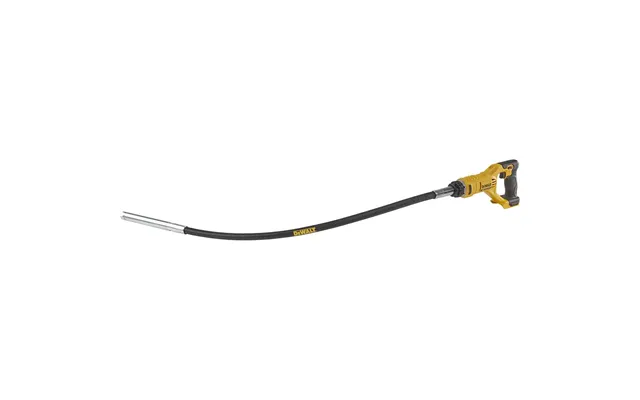
Concrete vibrators remove entrapped air and help aggregates settle, improving strength and surface finish. Internal “poker” vibrators insert a vibrating head directly into the pour. Common head diameters range from about 1 in to 2.5 in, and typical frequencies sit around 8,000 to 12,000 VPM. External vibrators bolt to forms when you need a cleaner surface, less intrusion, or when rebar density makes insertion tricky. If you pour frequently, choosing a durable, well-balanced unit can shave hours off your day and dramatically reduce honeycombing and blowouts.
When mobility is key, portable vibrators shine. Battery-powered models are increasingly capable, with enough runtime for small to mid-size tasks, especially on scattered job sites or areas without easy access to power. They’re convenient for occasional use, quick fixes, and light compaction work, though for all-day shifts, corded electric or air-powered units often take the lead.
Start with your goal—do you want to keep powders flowing, compact a box or bag, or finish a slab of concrete? Then match the vibrator type, force, and frequency to your task, and confirm that your power source and mounting surface will cooperate. A little planning goes a long way here.
Identify the problem you’re facing: bridging near the outlet, rat-holing down the center, or material sticking on the walls. For light powders and plastics, a small rotary electric or a turbine air unit often works beautifully. For sticky, damp, or fibrous materials (think molasses-coated grain or damp sand), a piston vibrator’s punchy linear hits can break up arches. Place the vibrator on a solid mounting plate a short distance above the outlet, not at the lip, and consider using a regulator or timer to pulse vibration so you’re not shaking all day unnecessarily.
Choose head diameter by the size and density of your pour. Smaller heads (around 1 in) slip through tight rebar and thinner sections, while larger heads (2 in to 2.5 in) move more material in bigger sections. Aim for around 8,000 to 12,000 VPM and insert the head vertically in a grid, overlapping the “radius of action.” A helpful rule of thumb: space insertions roughly one-and-a-half times the radius of action so the zones overlap and you don’t leave voids. Don’t leave the head in one spot too long; it can cause segregation. Short, controlled insertions are your friend.
In sanitary environments, stainless housings and smooth surfaces help with washdown and hygiene. For hazardous areas, choose explosion-proof or air-driven units designed for the classification in question. When dust, fibers, or vapors could be present, the right rating and proper grounding become non-negotiable. If you’re unsure, consult your safety officer or a qualified engineer before you proceed.
Don’t let spec sheets intimidate you. A few core numbers do most of the heavy lifting: pounds-force (lbf), vibrations per minute (VPM), amplitude (inches), horsepower for electric units, and air pressure/flow (psi and SCFM) for pneumatics. Your task is to pick a combination that moves your material without beating up your equipment or burning through energy.
Force is the muscle, frequency is the speed. For flow aid on small to mid-size bins and hoppers, you might start with a compact unit producing dozens to a few hundred lbf and adjust upward if needed. For compaction tables or stubborn materials, higher force often helps. Frequency around a few thousand VPM suits many flow-aid tasks; concrete typically benefits from roughly 8,000 to 12,000 VPM. Keep in mind: the same force at different frequencies can feel very different in practice, so test if you can.
As a very general starting point, light-duty flow aid might land around a few lbf per square foot of the impacted wall area, while serious compaction and stubborn flow issues can demand much more. For concrete, match head size to section thickness and rebar congestion, and avoid oversized heads in tight cages. These are ballpark ideas—your material and geometry will nudge you up or down—so stay flexible and be ready to tune.
Great news: a well-mounted small vibrator often beats a poorly mounted big one. The goal is to transmit energy into your equipment, not to rattle the vibrator on a flimsy bracket. A solid mount is the secret sauce.
Use a robust mounting plate welded or bolted to a stiff part of the wall or frame. Avoid thin sheet without reinforcement; add ribs or a channel if needed. On bins and hoppers, mount a short distance above the outlet for maximum impact on flow. On tables, place units symmetrically to maintain a uniform surface. Tight, high-grade hardware is essential; use locking nuts or thread locker to resist loosening.
Pneumatic vibrators love clean, dry air. Install a filter-lubricator-regulator (FLR) set close to the unit, and set pressure according to the manufacturer’s guidance. If noise is a concern, add a muffler on the exhaust. In cold or humid environments, watch for icing—dryers or heaters might be your best friends when temperatures plunge.
Don’t mount vibrators to fragile surfaces, and don’t overtighten to the point of crushing a wall. Use flexible conduit or hose to reduce the chance of fatigue. If you see fatigue cracks forming near welds, stop and rework the mount with thicker material or better reinforcement. A few extra minutes here can save you a lot of downtime later.
Before you fall in love with a model, make sure it plays nicely with your power source and control scheme. That includes line voltage for electric units or available air supply for pneumatics, as well as how you’ll start, stop, and adjust the unit during the workday.
Most electric vibrators are available in single-phase or three-phase configurations. Check your site power (common options include 120 V single-phase for light-duty and higher-voltage three-phase for heavier loads). If you plan to adjust frequency, a variable-frequency drive gives you a smooth dial from low to high VPM. Pay attention to duty cycle—continuous duty designs are built to run and run without cooking themselves.
Confirm your compressor can deliver enough psi and SCFM for the units you’re considering. Undersupplying air leads to weak, inconsistent vibration; oversupplying can wear components prematurely. A regulator lets you fine-tune force on the fly, and a solenoid valve plus a timer makes pulsing automatic. That’s a simple way to get flow when you need it without running the unit all day.
Vibration is powerful—treat it with respect. Use gloves and hearing protection as needed, lift with proper technique, and keep hands and clothing away from moving parts. Secure the work area so nothing walks off a table while vibrating. For concrete, be mindful of rebar snags and keep cords and hoses away from sharp edges.
A little preventative care keeps a vibrator humming for years. Electric units appreciate clean mounting surfaces, proper torque on bolts, and a quick check for frayed cables. Pneumatic units want clean air and the right lubrication rate. If performance dips, start with the basics.
If vibration seems weak, confirm power: correct voltage for electric or adequate psi/SCFM for pneumatics. Excess heat in an electric unit can point to overloading, poor ventilation, or misalignment. Loud changes in noise may signal a loose mount, worn bearings, or, in air units, a clogged muffler. For concrete heads that underperform, check the drive shaft and make sure the flexible shaft isn’t kinked, then verify your frequency under load.
Vibrators are versatile, but they’re not the only game in town. Fluidizing pads blow small amounts of air through hopper walls. Air cannons deliver intermittent blasts to break loose material. Agitators stir the contents mechanically. Often, the best answer is a combination—say, a small rotary vibrator combined with a well-placed liner or a chute angle tweak. Don’t be shy about mixing and matching to keep your process consistent.
If you need a compact, relatively low-cost solution that’s easy to install and control, vibrators are hard to beat. They’re the first thing many engineers try because they can be added to existing equipment without a redesign. When your challenge is intermittent bridging, slow discharge, or routine compaction, a vibrator is often the simplest, fastest win.
Deals on industrial vibrators pop up across multiple sellers, and prices can vary more than you’d expect. Using a comparison site helps you scan popular offers and narrow your shortlist by type, force, features, and budget in minutes instead of hours. Because you can line up options side by side, it’s easier to spot an overpowered unit you don’t need—or a well-priced model with a better warranty or included mount. If you’re watching the bottom line, consider bundles that include mounts, controllers, or hoses, and check for refurbished or open-box units with full testing.
Look beyond the headline price. Confirm your required force and frequency, duty rating, housing protection, noise profile, and whether hardware, cables, or regulators are included. For concrete, compare head diameter options, shaft length, and frequency control. If you plan to run all day, continuous duty is a must. And always factor in the cost of proper mounting and air prep—those finishing touches make or break performance.
Need some quick inspiration? Here are a few common setups that work well for small-to-mid operations. Use them as a starting point, then tune to your specific material and geometry.
A compact pneumatic piston vibrator mounted a foot or so above the outlet, fed by clean air at around typical shop pressure, can keep sugar blends and cocoa moving. Add a regulator to dial down the hits for lighter products and a timer to pulse during discharge only. A simple rubber isolation pad between the mount and frame can reduce noise while still delivering energy into the wall.
Pair a lightweight internal vibrator head around 1 in with a flexible shaft that reaches your deepest section. Run near 10,000 to 12,000 VPM and insert quickly in a grid pattern, letting the surface go from dull to glossy before moving on. Keep the head vertical, overlap zones, and avoid dragging it through the mix to prevent segregation. You’ll see fewer voids and a cleaner finish with less patching later.
A small table (say, a top around 24 in by 24 in) with a mid-force electric rotary vibrator makes repeatable packing fast and consistent. Mount the vibrator off-center under the deck and experiment with force until bags or boxes settle quickly without walking. A timer or foot switch keeps operators moving efficiently, and edge rails help keep products secure.
Worried about energy costs? Electric rotary vibrators tend to be efficient for continuous use, especially with frequency control that lets you run only as hard as you need. Pneumatic units are fantastic for tough environments and quick bursts, but compressed air isn’t free—make sure your compressor is sized and maintained, and use pulsing rather than continuous operation when possible. Right-sizing the vibrator is the greenest move of all; too much force wastes energy and can wear out your equipment faster.
Vibration creates sound—some setups roar, others purr. Electric rotary units are generally quieter than piston air vibrators. If noise is a concern, consider turbine pneumatic designs, isolation mounts, mufflers, and smarter duty cycles. Keeping operators comfortable pays back in productivity and morale.
Two units might look the same on paper, but serviceability and support can differ. Bearings that are easy to replace, accessible grease points, rugged cables, and tough housings save time in the long run. A good warranty is a comfort blanket, but real value shows up in daily reliability and parts availability. If your process is critical, keeping a spare on the shelf for quick swaps is a smart form of cheap insurance.
Industrial vibrators are the quiet heroes behind smooth flow, tight packs, and stronger concrete. Pick the right type—electric rotary for broad compaction and flow, pneumatic piston for stubborn bridges, and properly sized concrete vibrators for flawless finishes—then mount it well, power it right, and control it smartly. Compare options across sellers to match your force, frequency, duty cycle, and budget, and don’t forget the simple extras like solid mounts and air prep. Do that, and you’ll turn daily headaches into dependable, repeatable results that keep your operation humming.