
Anemometers price list
Last updated Sunday, 27 Sept 2026




Loading...
Last updated Sunday, 27 Sept 2026
An anemometer is a tool that measures wind speed—and often wind direction or related airflow data—so you can make better decisions when working outdoors. Think of it like a speedometer for the air: instead of telling you how fast a car is going, it tells you how fast the wind is blowing over your roof, around your sail, or past your drone. Modern handheld anemometers are compact, easy to use, and deliver instant results in common units like miles per hour (mph) or feet per second (ft/s).
Do you build, fly, sail, or garden? If so, knowing wind speed can save time, money, and safety risks. Roofers and builders use wind readings to schedule crane lifts and secure materials. Sailors and kiteboarders pick the right day to get on the water. Drone pilots check wind gusts to avoid crashes. HVAC technicians diagnose airflow problems, while amateur weather watchers log local conditions. An anemometer takes the guesswork out of those decisions.
Not all anemometers are created equal. There’s a surprising variety, and each type has pros and cons depending on what you need to measure.
Cup anemometers use small cups that spin on a vertical axis as the wind blows. They’re robust and used in many standard weather stations. Cup models are great for average wind speed measurements over time, but they can be bulky compared with handheld options. Expect reliable readings in open outdoor sites where you can mount them on a pole or mast.
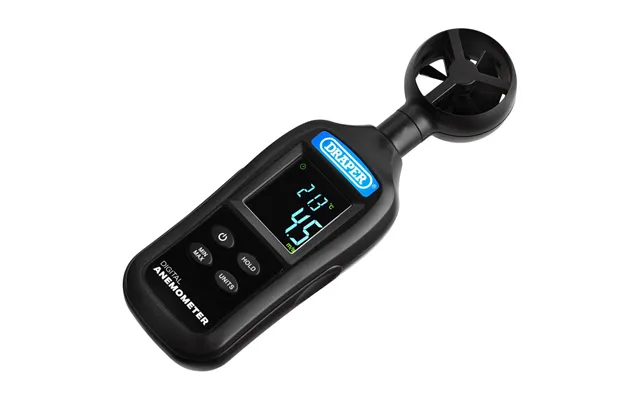
Vane anemometers look a bit like tiny fans: a propeller or vane faces into the wind and measures speed. They’re common as handheld devices and are excellent for directional measurements—so if you need wind direction and speed at the same time, a vane unit is handy. They’re quick to respond to gusts and work well close to vents, ducts, or building walls for HVAC diagnostics.
Hot-wire anemometers measure cooling of a heated wire by the flowing air. They’re very sensitive and can measure low air speeds that cup or vane units might miss. If you’re working in indoor ventilation where airflow is gentle—think ft/min or low ft/s—a hot-wire tool can be the right choice. Be aware they are delicate and often more expensive.
Ultrasonic models use sound pulses to calculate wind speed and direction with no moving parts. That makes them low-maintenance and highly accurate. They’re common in professional weather stations and research. If you need precise, long-term monitoring and can accommodate the higher cost, an ultrasonic anemometer is an investment that pays off.
Pitot tubes measure airspeed by comparing static and dynamic pressure and are commonly used in HVAC and aviation diagnostics. They’re precise for ducts, vents, or measuring aircraft airspeed, but they require some knowledge to use correctly and often connect to a manometer or digital gauge to display results in mph or ft/s.
Picking the right wind meter is more than price and brand. Focus on features that match how you’ll use it.
Check the accuracy spec—many handheld units advertise ±1 to ±3% or ±0.5 mph, depending on range. Also look at the measurement range: hobby units often read from about 1 mph up to 60–80 mph, while professional models can handle 100+ mph. If you measure gentle breezes around the house, a low-end range is fine; if you sail or work on rooftops, get a model with a high top end.
Make sure the device displays units you understand—mph and ft/s are standard in many regions. Sampling rate (how often the device updates) and averaging mode matter too: a fast sampling rate is useful for gusty conditions, while averaging smooths out momentary spikes for a stable reading. Look for Quick/Peak/Average options if you’ll compare steady wind and gusts.
Want to log data over time or download results? Many modern anemometers include internal memory and USB or Bluetooth connectivity. That’s great for building a wind profile or sharing data with colleagues. If you use analysis software or need to create reports, opt for models with reliable data export options.
If your meter will live outdoors, choose a weatherproof model with a solid IP rating and corrosion-resistant materials. For handheld use, look for rugged housings and comfortable grips. For permanent monitoring, check mounting options—mast clamps, tripod threads, or base plates—so you can keep the sensor at the right height without improvising.
Battery life matters when you’re working remote or logging long-term. Many handheld meters run on common AA or 9V batteries and last dozens of hours; some higher-end models use rechargeable packs that can run for 20–40 hours or longer. If you need continuous monitoring, consider models that accept external power or solar charging panels.
Your job, hobby, or project sets the priorities. Below are practical recommendations to match the tool to the task.
You want a compact, rugged handheld that reads gusts and averages, with a top speed well above typical wind conditions—aim for at least 60–80 mph capability. Water resistance is essential, and a model with a backlight is helpful for early morning or dusk sessions. Quick sampling to catch gusts and a peak-hold feature let you judge a wind window fast.
Lightweight, high sampling-rate vane meters or small ultrasonic units fit the bill. You’ll want accurate short-term gust readings in mph to decide takeoff safety. A pocket-sized unit that clips to your belt and gives fast updates is often more useful than elaborate logging features.
Vane or hot-wire meters that come with pitot adapters will provide the airflow data you need in tight spaces. Look for models that read low speeds accurately in ft/s and can report volumetric flow when paired with duct area measurements. A telescoping probe or remote sensor makes measuring inside vents easier.
Durable, weatherproof models with simple, reliable readouts are best. High top-end ranges and gust detection are important for crane operations, scaffold safety, and scheduling work in high wind. A unit with a tripod mount or mast-ready design helps capture accurate open-field readings away from building turbulence.
Consider ultrasonic or cup anemometers for permanent installs combined with temperature and barometric sensors. If you log long-term data to a PC or cloud, choose units with data export and a secure mounting kit to keep the sensor at standard measurement heights, like around 33 ft for some official comparisons.
There are many models across price ranges. Below are typical picks and the situations where they shine—think of these as categories rather than exclusive endorsements.
These start around a modest price and cover casual users who need quick mph readings for a garden, kite session, or backyard weather monitoring. Expect decent accuracy for general use, compact size, and battery operation. They’re perfect when you want a simple answer fast.
Mid-range units often include data hold, peak readings, better sensors for low-end accuracy, and sometimes Bluetooth. They’re a great choice for pros who need portability and more reliable readings without the high cost of professional weather sensors.
These models are built for engineers, research, and long-term weather monitoring. Expect ultrasonic options and precise calibration, wide measurement ranges, robust data logging, and solid mounting hardware. These are investment tools that reduce uncertainty in critical tasks.
An anemometer rarely works alone. Matching accessories can improve accuracy and usability.
Mounting your sensor at the right height removes building interference and provides more reliable readings. A simple tripod or dedicated mast clamp can make a huge difference compared with handheld, especially if you’re logging over time.
If you want more than wind—temperature, humidity, barometric pressure—look at integrated weather stations. These combine anemometers with other sensors and often include wireless data links to a console or cloud service for continuous monitoring.
Probes extend your reach into ducts, around obstacles, or into tight spots where a handheld can’t fit. Pitot-style adapters are essential for duct airflow testing and aviation-related measurements.
Even the best anemometer will give poor readings if you place it in the wrong spot or misuse it. Here are proven tips to get data you can trust.
Wind speed changes a lot with obstructions. For open-field averages, place sensors away from trees, buildings, and at least 33 ft above ground if you want standard comparability. For local checks—like at roof level—measure at the same spot each time to track changes consistently.
Near structures, gusts and swirls can dramatically change readings. If you measure next to a wall, use a remote probe or move a few feet away to avoid turbulent pockets. Averaging over 10–20 seconds can smooth out momentary eddies depending on your purpose.
Most handhelds are stable, but periodic calibration or comparison with a reference unit keeps accuracy in check. If you notice drift or inconsistent peaks, consult the manual for calibration steps or send the instrument for professional recalibration if precision matters.
When logging data, note the time, location, height, and any nearby obstacles. Context makes raw numbers useful later—like knowing that a 20 mph reading was taken at roof level next to a gusty ridge versus in an open field.
Many users get unreliable results from simple mistakes. Avoid these common traps.
Placing the sensor too close to obstructions or at inconsistent heights gives misleading trends. Keep placement consistent and representative of the area you care about.
Don’t confuse peak gusts with sustained wind. For safety decisions—like whether to suspend crane work—both numbers matter. Use peak or gust-hold features for maximum gusts and averaging modes for steady-state wind.
Wind is dynamic. One reading is a snapshot. Take multiple readings, log over time, or use a permanent monitor to understand patterns rather than reacting to a single number.
Anemometers are simple in concept but rich in variety—there’s a right tool for every need, from casual kite flying to professional HVAC diagnostics and scientific monitoring. Start by matching the sensor type to your use case, check for accuracy and mounting options, and don’t forget data logging if you’ll need to analyze trends. With the right meter and a little care in placement, you’ll turn uncertain guesses about wind into confident decisions that save time, money, and stress.