
Airbrushes price list
Last updated Friday, 18 Sept 2026



View 6 Offers
Loading...
Last updated Friday, 18 Sept 2026
If you’ve ever wanted a finish that looks smooth as silk or details as crisp as a photograph, an airbrush is your secret weapon. It’s like trading in a blunt pencil for a fine-tipped fountain pen—suddenly, gradients, soft shadows, and feathered edges are within reach. Whether you paint scale models, cake decorations, auto touch-ups, or custom makeup, an airbrush gives you control that brushes and spray cans struggle to match.
Not all airbrushes are built the same. Choosing the right style depends on the job: fine detail, broad coverage, or something in between. Let’s break down the three common formats so you can match tool to task.
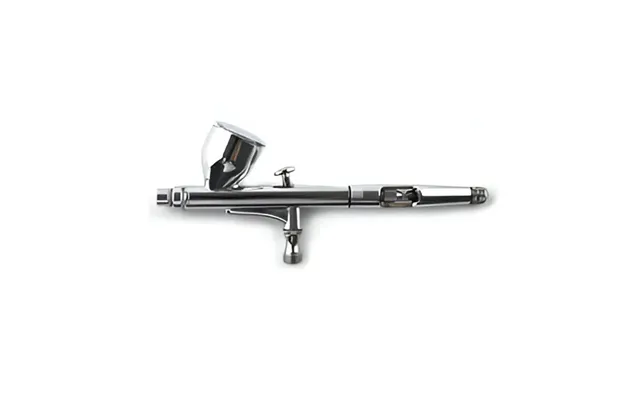
Gravity-feed models have a paint cup on top, which feeds paint directly into the nozzle using gravity. That design reduces the air needed, so you can work at lower pressures—great for delicate work. Think of them as precision scalpels: ideal for portraits, small-scale models, and nail art where control is everything.
Siphon-feed airbrushes draw paint from a bottle or jar under the brush. They’re the heavy lifters when you need more paint volume for larger surfaces or longer continuous spraying, like murals or base coats on model cars. They’re a little messier than gravity-feed units but excellent for bulk coverage.
Side-feed models give you a middle ground: the paint cup sits to the side, offering better visibility than siphon-feed while allowing larger cups than gravity-feed. If you want versatility—switching between fine detail and medium coverage—side-feed is a strong compromise.
Choosing between single-action and double-action is like choosing between an automatic and a manual transmission. Both will get you there, but they offer different levels of control and learning curves.
Single-action airbrushes lock the paint flow when you press the trigger; the trigger only controls airflow. They’re simpler to use and easier to master quickly, which makes them friendly for beginners and for repetitive tasks like base coats or stenciling.
Double-action models let you vary paint flow by pulling back on the trigger while controlling airflow. That extra nuance allows feathering, soft fades, and ultra-fine lines—if you can master the coordination. Think of double-action as a musician’s instrument: the more you practice, the more expressive you become.
Nozzle size determines how fine or broad your spray will be. Instead of thinking in complex numbers, picture the nozzle as the mouth of a garden hose: smaller openings give a narrow, precise stream; larger openings give a wider fan.
These tiny tips are the detail specialist’s choice. Use them for hairlines, micro-shading, and miniature decals. You’ll work at lower pressure—often under 20 psi—to avoid blasting paint past your mark.
This range covers the majority of hobby and craft jobs. It gives enough versatility to do detail work and decent coverage without constantly swapping tips. For most modelers and hobbyists, a 0.012 to 0.016 inch nozzle becomes the everyday workhorse.
Your compressor is the heart of an airbrushing setup. It dictates how steady your airflow is and how much continuous spraying you can do without pauses. Buying the right one means balancing portability with performance.
Most airbrushing tasks happen between 10 and 40 psi. Fine detail often falls in the 10–20 psi range, while broader coverage or thicker paints might need up to 40 psi. If you want a single, flexible unit, look for a compressor with an adjustable regulator that reliably holds pressure within that window.
Tanks store compressed air so you get a smoother, less pulsing spray. Compact compressors without tanks are great for quick touch-ups and portability, but a small tank—about 1 to 2 gallons—gives steadier output for longer sessions. For long continuous work, consider a larger unit or one rated for extended duty cycles.
A good accessory kit turns a functional airbrush into a reliable system. Don’t skip the small things that improve control, safety, and finish quality.
Buy a flexible hose that matches your compressor’s fittings and a regulator with a pressure gauge. A quality regulator keeps psi steady; without one, you’ll wrestle with fluctuating spray between strokes. Also, consider quick-disconnect fittings for easy tool swaps.
Compressed air contains moisture that can ruin a paint job. Inline moisture traps or filters catch water and particulate before it reaches the nozzle, preventing sputters and spotting. It’s a small investment that protects hours of careful work.
Paint selection matters. Some formulas are airbrush-ready, while others need thinning. Choose based on your project—models, automotive, cosmetics—and follow safety precautions for solvents and ventilation.
Acrylics are beginner-friendly: they clean with water and have lower fumes. Enamels and lacquers give tougher, glossier finishes for models and automotive work, but they require specific thinners and stronger ventilation. Always match your paint type to your compressor and nozzle setup for the best results.
Thinning is part science, part feel. Start with a small test cup: mix one part paint to one part thinner by volume for medium-bodied acrylics, then adjust in ounces until you reach the viscosity of skim milk—thin enough to flow but not to run. Keep a small syringe or measuring cup handy to replicate mixes precisely.
While I won’t name a single “best” product—because the best is the one that fits your needs—here are types of kits to consider depending on what you do. Use a comparison site or retailer filters to compare specs and prices.
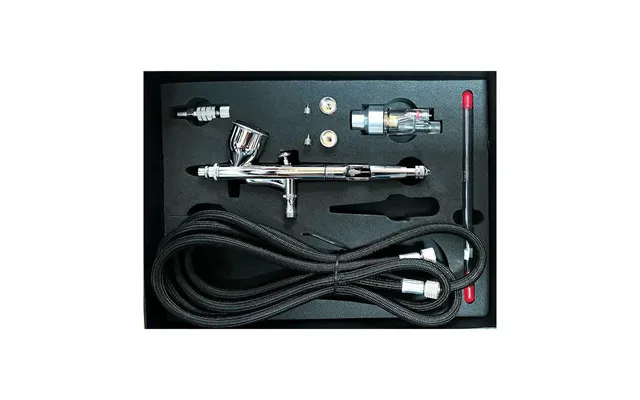
Look for a gravity-feed, single-action kit that includes a basic compressor, hose, a general-purpose nozzle near 0.012 inch, and cleaning tools. These kits focus on ease of use and value. They’re perfect for hobbyists who want to learn fundamentals without a steep investment.
If you’ve got some hours under your belt, step up to a double-action gravity-feed airbrush with multiple nozzle sizes—a 0.008 inch for detail and a 0.016 inch for coverage—and a compressor with an adjustable regulator and at least a small tank. This setup gives more control and flexibility as your skills grow.
Professional users often choose branded double-action airbrushes with precision machining, spare parts availability, and high-quality compressors with larger tanks and oil-free pumps. These kits emphasize reliability, consistent psi, and fine atomization for flawless finishes.
Like a musical instrument, an airbrush needs regular care. A few minutes of cleaning after each session prevents clogs, keeps spray patterns consistent, and extends nozzle life.
At the end of a session, purge the remaining paint by spraying solvent through the brush until it runs clear. Wipe the needle and mouth of the nozzle gently with a soft cloth. A short cleaning prevents dried paint from building up and saves you headaches later.
Every few uses, disassemble the airbrush to clean the needle, nozzle, and paint cup with appropriate solvents and soft brushes. Never force parts apart; use the manufacturer’s guide. If you notice irregular spray or spitting, inspect the nozzle for hardened paint or dents and replace it if needed.
One of the joys of an airbrush is how many different projects it unlocks. From subtle texture work to bold custom jobs, the tool adapts to countless creative goals.
Airbrushing is the fastest way to achieve consistent base coats and realistic weathering effects on models. Use masking and stencils for camo patterns, and low psi with fine nozzles for shading and panel lines.
For food-related work, select dedicated food-safe airbrush colors and compressors reserved for edible paints. Soft gradients, stenciled designs, and delicate dusting all become achievable without messy brushes.
Airbrushes are indispensable for blending small repair spots and adding subtle pinstripes or shading on custom paintwork. For automotive projects, use lacquer or urethane-compatible paints and ensure proper ventilation and respiratory protection.
Airbrush gear ranges from budget-friendly to premium. If you’re shopping, compare specs like nozzle sizes in inches, compressor psi range, tank capacity in gallons, and what accessories are included. A slightly higher upfront investment in a quality airbrush often saves money over time because parts last longer and performance stays consistent.
Everyone starts somewhere. Avoid common pitfalls like using the wrong thinner, running at too-high pressure for small details, or skipping moisture traps. These mistakes are fixable and learning to recognize them will speed your progress.
Higher psi can splatter paint and ruin fine lines. If your edges are blowing out, dial pressure down and experiment with smaller nozzle settings instead.
Letting paint dry inside the nozzle is the fastest route to clogging. Clean after each session, and do a deep clean weekly if you paint daily.
Try before you buy if possible: local hobby shops sometimes let you test hands-on. Read reviews that mention nozzle life and customer support. And remember, the perfect setup balances your project needs with your budget—there’s no single “right” choice for everyone.
Airbrushing is a craft that rewards patience and practice. With the right combination of airbrush type, nozzle size in inches, compressor with adjustable psi, and proper cleaning routine, you’ll be painting like a pro sooner than you think. Use comparison tools to match specs and price, and enjoy the process of learning a tool that can expand your creative horizons.
Conclusion: If you want precision, smooth gradients, and professional-looking finishes across hobbies and trades, an airbrush is worth the investment. Start with a kit that fits your skill level, invest in a reliable compressor that holds steady pressure in the 10–40 psi range, and clean your equipment regularly. Soon, you’ll be producing work that looks as if it were done by a trained hand—because it will be.