

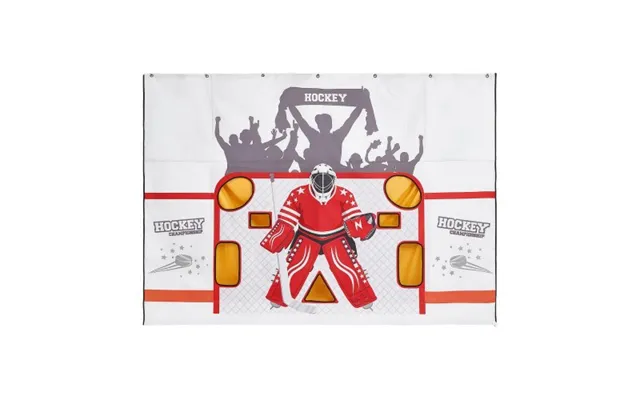
Hockey Goals price list
Last updated Tuesday, 24 Nov 2026
| Hockey Goals | Price |
|---|---|
| Vevor Hockey Shooting Tarp - Shooter Tutor Ice Hockey Goal Practice Target | £87.99 |


Loading...
Last updated Tuesday, 24 Nov 2026
| Hockey Goals | Price |
|---|---|
| Vevor Hockey Shooting Tarp - Shooter Tutor Ice Hockey Goal Practice Target | £87.99 |
If you love hockey, you know the goal is more than a target — it’s the centerpiece of every practice, backyard game, and scrimmage. Choose the right hockey goal and suddenly your shots feel truer, your drills become more productive, and your confidence rises. Whether you’re training a future pro, teaching kids to skate, or just having fun on a driveway, the goal you pick matters. Ready to find the perfect net?
Ice hockey goals are the classic, heavy-duty frames used in rinks and serious training. They typically conform to regulation dimensions — about 6 feet wide and 4 feet tall — with a sturdy steel frame and thick netting. These are built to withstand high-velocity pucks and repeated impact, so if you’re practicing slap shots or goalie drills, an ice-certified frame is ideal.
Street hockey goals are lighter, often made from PVC or lighter steel, and come in convenient sizes like 48 inches or 60 inches wide. They work great on concrete, asphalt, or artificial turf and are designed to be portable and affordable. If you want a casual, daily-play option for kids or adults, a street goal is practical and fun.
Pop-up goals fold flat and set up in seconds — perfect for pickup games, park sessions, and travel. Sizes vary from small 36-inch goals for quick shooting practice to larger 60-inch portable nets that handle five-on-five scrimmages. They’re not as durable against high-power slap shots, but they win on convenience and speed.
Training nets and rebounders are specialized tools for improving accuracy, passing, and reaction time. Often smaller than match goals, they return the puck or ball at predictable angles, allowing repetitive skill reps. These are a must-have if you want to sharpen shooting mechanics without needing a practice partner.
Steel frames provide the best durability and are standard for ice goals, but quality varies. Look for powder-coated steel to resist rust, especially if you’ll use the goal outdoors. Lighter metals or reinforced PVC are fine for street goals, but know they’ll flex more under heavy impact. If you want something long-lasting, prioritize thicker tubing and welded joints.
Not all netting is created equal. High-grade netting has tighter knots and thicker twine to resist tearing from pucks traveling at high speed. For backyard play, polypropylene nets perform well and dry quickly after rain. For rink use, consider nylon or reinforced polyethylene with larger diameters to handle repeated hits.
Regulation ice hockey goals are about 6 feet wide by 4 feet tall and 40 inches deep at the base. For youth and casual play, smaller sizes like 48 inches or 60 inches are common. When buying, measure your space — a full-size goal takes up real estate, so ensure you have about 8 to 10 feet behind and around it for safety and play movement.
If you change practice locations or play outdoors often, weight and assembly matter. Pop-up and bolt-together goals set up fast, while welded steel goals can take longer but need less maintenance after installation. Look for tools-free assembly or quick-release pins if you want to move your goal frequently.
Bauer and CCM are household names in ice hockey equipment, and their goals and frames reflect that pro-level pedigree. Their full-size goals often feature reinforced crossbars and heavy-gauge steel — perfect for clubs and dedicated training facilities. Expect regulation-sized goals that handle puck velocity and repeated use without bending or warping.
Franklin Sports makes accessible street and garage goals in sizes like 48 inches and 60 inches. These are great for kids and casual players. Rukket focuses on training nets and pop-up goals, offering portable practice nets commonly around 6 feet wide, ideal for shooting drills and soft-landing rebounds. Both brands strike a solid balance between cost and durability.
Forza and Quickplay produce high-quality rebounders and training targets that coaches love. Their nets are purpose-built for skill development — think angled panels that return pucks at realistic trajectories, and durable frames that stay square after thousands of strikes. If skill repetition is your goal, add a branded rebounder to your kit.
Goal-specific accessories from Grit and Easton include sturdier frames, pocketed netting for easier puck retention, and protective tubing to prevent bounce-outs. Combine one of these goals with proper goalie equipment and you'll create a safer, more realistic training environment for netminders.
If you’re shopping on a budget, look for a solid 48-inch street goal with PVC or light-gauge steel. These usually weigh between 10 and 20 pounds, set up fast, and are easy to store. They’re perfect for kids learning to shoot or for casual backyard play. Expect less resistance to heavy slap shots, but they’re excellent for fun and basic skill work.
Mid-range nets typically range from 60 inches to full size and use higher-gauge steel with better netting. These goals balance portability with durability — many come with anchoring kits or ground spikes for outdoor stability. If you practice several times a week or host regular pickup games, invest in one of these to avoid frequent replacements.
Professional goals are built to last and to meet official dimensions and tolerances. Expect powder-coated steel, machine-welded joints, thick netting, and sometimes integrated puck stoppers. These goals are heavier — often 60 to 120 pounds — and are ideal for clubs, rinks, and serious training programs where durability and performance are non-negotiable.
You’ll want at least 8 feet of space behind a full-size goal to allow puck rebound and goalie movement, and 2 to 4 feet clearance on the sides for safety. In a driveway, account for fences, vehicles, and pedestrians. If you’re placing a goal on a deck or patio, make sure the surface can handle repeated impact without chipping or cracking.
Anchors and sandbags keep goals from tipping or sliding during play. For hard surfaces use weighted bases or sandbags. For grass or soft ground, 12- to 18-inch ground stakes are common. Anchoring not only improves safety but also mimics realistic net resistance for better training feedback.
A quick rinse of netting with a hose removes grime and freshens the material; let it air dry to prevent mildew. Use a soft brush and mild soap for tough spots. For frames, wipe down with a damp cloth and apply a rust inhibitor spray to welded joints if you play in wet climates. Regular maintenance extends lifespan and keeps your gear looking sharp.
Store nets indoors or under a protective cover when not in use. Pop-up goals usually fold flat and can be stashed in closets or garages. For steel goals, avoid leaving them outside all winter — freezing and thawing can fatigue metal and stress joints. If permanent outdoor placement is necessary, invest in a rust-proof coating and check anchor points seasonally.
If you’re training shooters, don’t forget goalie gear. A proper mask, chest protector, leg pads, and blocker create a safe and realistic drill environment. Even for casual sessions, adding a full set of goalie gear reduces injury risk and increases the quality of practice for both shooters and netminders.
Shooting targets that attach to the net help players learn accuracy by aiming for specific zones. Use weighted or “smart” pucks for consistent touch, and consider foam balls for driveway play to protect surfaces. Rebounders let you practice solo — you shoot and the net returns the puck at consistent angles so you can work on one-touch passes and quick-release shots.
Match your stick type to the playing surface — lighter composite sticks are common indoors and on ice, while durable street sticks with reinforced toe caps are better for asphalt. For pucks, choose rubber rink pucks for ice work and lighter street pucks or balls for driveways to prevent damage to concrete and car finishes.
Comparison sites and product aggregators help you quickly see features, reviews, and price differences across retailers. Use comparison tools to filter by size, material, and price, and to read user reviews about durability and setup. Keep an eye out for seasonal sales — off-season months are great for finding discounts on higher-end models.
Before clicking “buy,” run through a quick checklist: measure your available space, decide on frame material, choose the right size (48 in, 60 in, or full 6 ft x 4 ft), confirm portability needs, and review anchoring options. Also check what accessories are included — some nets come with ground stakes, carry bags, or target attachments that add value.
If possible, visit local sports retailers, rink supply stores, or community rinks to see goals in person. Handling a frame, feeling the net tension, and watching how easily a goal assembles can make the decision much easier than relying on photos alone. If a test isn’t possible, detailed reviews and comparison pages are your next best option.
Coaches often recommend buying the best goal you can afford — a sturdier goal saves money in the long run by lasting longer and withstanding harder shots. Parents should prioritize safety features and ease of setup, while competitive players should prioritize regulation size and frame rigidity. And remember: a good goal invites practice — it’s an investment in more reps and better skills.
Picking the right hockey goal depends on where you play, who’s using it, and how often you’ll use it. From pocket-sized pop-ups to regulation ice goals, there’s a perfect net for every scenario. Focus on durable frames, quality netting, and the right size for your space. Add a couple of training aids and proper goalie equipment, and you’ll have a setup that turns practice into progress. Ready to take your shots to the next level?