

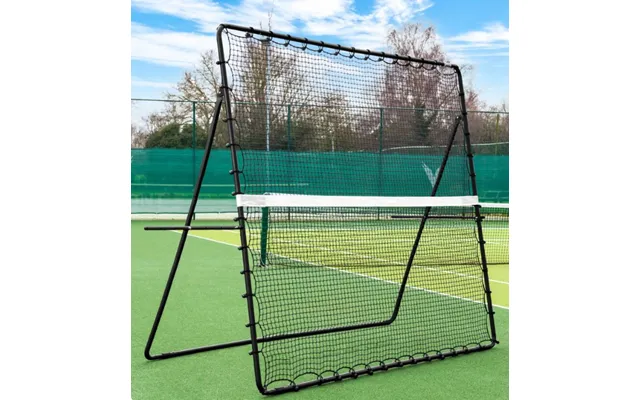
Tennis Nets price list
Last updated Wednesday, 18 Nov 2026
| Tennis Nets | Price |
|---|---|
| Tennis Training Net | £25.00 |

View 1 Offers
Loading...
Last updated Wednesday, 18 Nov 2026
| Tennis Nets | Price |
|---|---|
| Tennis Training Net | £25.00 |
Think of a tennis net like the spine of your court. It might look like a simple bit of mesh, but it sets the rules for play, controls bounce perception and affects every rally. Whether you’re hitting in a club, setting up a backyard court, or buying a portable net for clinics, the net’s quality, tension and height all change how the game feels. Buy the wrong net and you’ll notice it in every serve and volley; buy the right one and the matches flow naturally.
Before shopping, it helps to know the basics. A standard tennis net is 42 feet long and stands 3 feet high at the center. At the posts the height is 3 feet 6 inches. Net mesh typically has a banded top that sits on a cable or rope to maintain tension. Knowing these measurements prevents surprises—especially if you’re swapping nets between courts or installing a permanent setup.
Height changes the margin for error on passing shots and lobs. A slightly sagging net can lead to more net cords and shorter rallies, while an overly tight net can feel unforgiving. Length is equally important: a net that’s too short won’t reach the posts properly, and a net that’s too long may bunch up. That’s why most quality nets match the standard 42-foot length and include extra material to fasten securely to posts.
Not all tennis nets are created equal. Here are the main types you’ll come across and when each one makes sense:
Portable nets are perfect for driveways, parks or multi-use spaces. They usually fold or collapse into a carry bag and can be set up by one person in minutes. If you want to practice quick drills, teach kids, or play casual matches anywhere, a pop-up net is hard to beat. Expect lightweight materials and a trade-off in tournament-grade tension.
These are built to hold consistent tension and meet official standards. Tournament nets are heavier, with robust top bands, reinforced corners and a durable cable or steel rope. They’re designed for club courts and venues where durability and strict height control matter. If you’re running competitive events, opt for this class.
A permanent net usually comes with heavy-duty posts that anchor into the ground, often with concrete sleeves. These systems are designed for long-term use on private or public courts and typically include high-grade nets, center straps and adjustable tensioners. If you’re building a backyard court that will see regular play, this option pays off over time.
Mini nets are aimed at kids, beginners or specific training drills like volleys and soft hands. They’re shorter and sometimes narrower, which helps learners build confidence and scale the game to their skill level. They’re also great for recreational play in smaller spaces.
Material choice is a big factor in longevity and feel. Nets made from braided polyethylene resist rot and UV damage, while vinyl-coated polyester offers a balance of durability and flexibility. Look for reinforced edges and a stitched top band, because that band bears the most stress. A rust-resistant cable—steel with a protective coating—is ideal for the inner tension line.
Tightly woven, knotted mesh tends to last longer but can be heavier. Knotless nets are lighter and easier to handle, but they may not hold shape as well under heavy use. If your court sees frequent play in damp conditions, go for materials that are mildew and UV resistant; they’ll keep tension and appearance longer.
A great net isn’t much without proper posts and hardware. Posts can be steel, aluminum or treated wood; steel is most common for durability. Look for posts with a tensioning mechanism—crank handles or windlasses are common—that allows precise tightening. Center straps keep the net at the correct 3-foot center height; adjustable straps make periodic tweaks easier as nets stretch over time.
For permanent installations, posts often sit in concrete sleeves. This makes future replacement straightforward because you don’t need to dig up concrete every time. For portable or seasonal courts, removable sleeves and bolted bases are a practical compromise. Always check local frost and soil conditions when planning installation depth if you’re anchoring posts outdoors.
Portable nets win on convenience and price. They’re lightweight, simple to store and let you create a court in unconventional places. On the downside, they don’t have the rock-solid tension of permanent setups and can feel flappy in windy conditions. Permanent nets provide stability, better tension control and a pro-level feel, but they require installation time, a higher upfront cost and commitment to one location.
Ask yourself how often you’ll use the net, where you’ll use it and who will be playing. For casual family use and travel, portable is the way to go. For club play or a backyard court used weekly, go permanent. If budget allows, you can combine both: a permanent court for regular matches plus a portable training net for practice sessions elsewhere.
Investing in a few extras can save you money and frustration later. Here are accessories worth considering:
A sturdy center strap is non-negotiable for keeping the net at regulation height during play. Post caps protect the top of metal posts from weather and prevent abrasions to the net cable, extending both net and post life.
If you rotate nets or have seasonal use, a weatherproof cover or carrying bag protects the net from UV damage and moisture when not in play. This is especially valuable for portable nets that live in garages or trunks between sessions.
Having an extra tension cable and a proper tension wrench or crank on hand helps maintain a consistent playing surface. Over time cables can fray and hardware can corrode; replacing these parts is cheaper than buying a new net.
Different players need different nets. Here’s a practical guide so you don’t buy more than you need:
A heavy-duty portable net or a mid-range permanent kit is ideal. Look for UV-coated mesh and a sturdy top band so your net doesn’t sag after a few months of summer play. If kids are involved, prioritize a forgiving material that won’t tangle with little hands.
Clubs should invest in tournament-grade nets with heavy-duty posts, steel tension cables and replaceable top bands. These nets hold tension longer, resist vandalism and withstand continuous use.
For coaching, versatility matters. Portable nets that break down quickly let you practice at schools, parks and different court types. Lightweight but stable designs with quick tension adjustments are most useful here.
Price ranges vary widely: a basic portable net can cost under a modest budget, while tournament-grade kits with anchored posts and accessories run higher. Instead of chasing the cheapest option, match features to your needs. A net that lasts twice as long and keeps tension will save you money in the long run. Comparison sites, including trusted comparison tools, help you see specs side by side so you can balance cost, features and warranty.
When comparing nets, focus on: net length (42 feet for standard), material (UV-resistant braided poly or vinyl-coated polyester), top band quality, cable type (galvanized or stainless steel), and whether replacement parts are available. Also check warranty terms—longer warranty can indicate confidence from the manufacturer.
Installation doesn’t have to be painful. For a basic permanent net: dig post holes wide and deep enough for concrete sleeves, set posts plumb, pour concrete and allow to cure. Attach the net cable through the top band, hook it to the winch on one post and adjust tension with the crank on the other. Finally, secure the center strap to set the 3-foot center height and make small tension adjustments with players on the court. For portable nets, follow the assembly sequence in the manual—usually base, post, cable, net, then tension.
Nets naturally sag with use and weather. Check tension monthly if your court sees regular play. Use the tensioning crank to tighten the cable gradually; over-tightening can damage the top band. Replace the cable or top band when wear appears to avoid sudden failure mid-match.
Windscreens reduce distraction and keep wind from turning long rallies into chaos. Line anchors and court clips help keep the net aligned with sidelines. If you play on clay or grass, consider net bottom straps to prevent foot or ball intrusion beneath the net and protect your court surface.
With many options on the market, comparison sites are a practical first step. They let you filter by type, price, customer reviews and specs—so you can spot the best value without visiting dozens of product pages. Look for sites that aggregate real-user reviews and include photos of installs to help you visualize the fit for your space.
Here’s a quick checklist to take with you when choosing a net: standard 42-foot length, center height 3 feet, top band stitched and durable, steel coated cable, posts matched to your install type (portable vs anchored), UV and mildew resistance, replacement part availability, and warranty coverage. If a product ticks these boxes, you’re probably looking at a sensible purchase.
Choosing the right tennis net comes down to matching the net’s build and features to how and where you’ll play. Portable nets win on flexibility, tournament nets deliver pro-level tension and permanent kits offer long-term stability. Keep an eye on materials, tensioning hardware and practical accessories like center straps and covers, and use comparison tools to find the best balance between price and performance. With the right net in place, every serve, return and volley feels that much better—so you can focus on the fun of the game.