

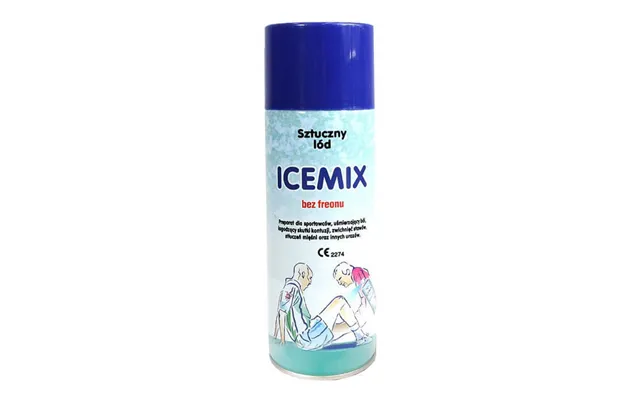


Electrical Freeze Sprays price list
Last updated Monday, 19 Oct 2026
| Electrical Freeze Sprays | Price |
|---|---|
| Icemix - Artificial Ice Spray | £3.70 |
| Arctic Hayes Professional Pipe Freezer Refill Can 509ml | £53.21 |
| Bradfords Arctic 700g Pipe Freeze | £125.14 |


Loading...
Last updated Monday, 19 Oct 2026
| Electrical Freeze Sprays | Price |
|---|---|
| Icemix - Artificial Ice Spray | £3.70 |
| Arctic Hayes Professional Pipe Freezer Refill Can 509ml | £53.21 |
| Bradfords Arctic 700g Pipe Freeze | £125.14 |
If you've ever wished you could freeze a problem in time to see what's really going on, an electrical freeze spray gets you pretty close. These aerosol cans deliver a powerful, directed burst of cold gas that rapidly cools small electrical components, circuit boards, sensors, and wiring. Think of it like a pocket-sized winter storm that arrives exactly where you point it—only it's used for troubleshooting and maintenance, not making snow angels.
Under the hood, freeze sprays release a refrigerant or compressed gas that expands as it exits the nozzle, dropping the temperature dramatically. A typical freeze spray can reach temperatures down to around -50°F to -60°F in the spray plume, which is cold enough to slow down or temporarily stop electrical behavior so you can locate intermittent faults or test thermal drift. The effect is almost instant, and once the gas dissipates the component warms back up, letting you watch problems appear and disappear like a light switch.
Freeze sprays are a staple in workshops, field service vans, and electronics labs because they solve problems in a fast, visual way. Here are the most common uses you'll encounter:
When a device acts up only when it heats a little, freezing the suspect component can reproduce or halt the issue. Technicians use freeze spray to cool resistors, ICs, and solder joints to see whether the fault is temperature-related. It's like tracing a ghost by shining a cold flashlight on it.
Need to verify a thermostat or temperature sensor? Applying a quick freeze to the sensing element lets you confirm whether the sensor responds correctly under cold conditions without waiting for your whole environment to cool down.
Freeze spray can sometimes help shrink adhesives, making it easier to separate glued parts or remove delicate components without applying heat. That makes it a valuable trick when heat would damage nearby parts.
Not all freeze sprays are created equal. When you're choosing a can for electronics or HVAC work, a few features matter more than price tags or flashy labels. Paying attention to these will help you pick a product that’s effective and safe for your tasks.
Manufacturers often quote a lowest achievable temperature for a spray plume. For electronics troubleshooting, colder is usually better—temperatures around -50°F to -60°F let you see thermal-related behaviors quickly. But remember, extreme cold also raises the risk of thermal shock and cracking on brittle components.
You want a narrow, controllable spray for pinpointing small parts like resistors or contact points. Some cans come with a straw or precision nozzle; others are broad and suitable for larger areas. Choose based on whether you're aiming at tiny SMD chips or larger connectors and terminals.
Typical cans come in sizes from about 6 oz to 14 oz, giving anywhere from a few minutes to a dozen minutes of intermittent spray time depending on how you use them. If you travel or repair on the go, a compact 6–8 oz can may be enough; for shop use, larger cans often give better value per ounce.
Some sprays use non-flammable refrigerants, while others employ flammable propellants. For electrical work, especially around power equipment, choosing a non-flammable formula reduces fire risk. Check Safety Data Sheets and product labels for flammability information before you buy.
Several reputable manufacturers make freeze sprays designed specifically for electronics. Brands you’ll repeatedly see in pro toolboxes include CRC, MG Chemicals, Techspray, and Kontakt Chemie. While product specs vary, the essentials—temperature performance, nozzle control, and safety data—are what set them apart.
Quick-chill sprays provide brief, moderately cold bursts good for diagnostics, while deep-freeze products maintain colder temperatures longer and are used when you need a stronger thermal shock. For everyday electronics troubleshooting, a quick-chill can is often all you need; reserve deep-freeze sprays for stubborn thermal issues or industrial sensors.
Freeze spray is a powerful tool, and like any power tool it needs respect. Misuse can lead to frostbite, cracked components, or accidental ignition if a flammable spray is used near open power. Here’s a safe workflow so you can use freeze spray without worrying about costly mistakes.
Always wear safety glasses to keep cold droplets out of your eyes. Gloves are a good idea—thin nitrile gloves protect against brief skin contact and cold burn. Use the spray in a well-ventilated area; refrigerant vapors can displace oxygen in small, confined spaces. If you're indoors, open a window or use a fan to disperse fumes.
Start with short, controlled bursts from a few inches away—aim for 2 to 6 inches depending on the nozzle and desired effect. Move the can in short passes; don’t hold the spray on one spot long enough to freeze the part solid. Aim, spray, observe, and repeat. This helps prevent thermal shock and cracking of solder joints or ceramic components.
Let’s walk through a couple of real-life examples so the abstract idea of “freezing a component” becomes a flesh-and-blood troubleshooting tactic you can actually use.
If your vintage amp cuts out when it warms up, isolate the amplifier while it’s powered and powered-down as needed, then apply brief sprays to suspect components such as electrolytic capacitors, transistors, and solder joints. If the dropout disappears when a component is cooled, you’ve likely found the culprit. Replace the faulty part or resolder the joint after proper diagnostics.
When a thermostat or temperature sensor consistently reports higher than actual room temperature, a quick freeze of the sensor’s sensing element can confirm responsiveness. If the reading drops to match the applied cold, the sensor is working; if not, the sensor or its wiring might be faulty. This saves you from replacing a whole control board when only a sensor needs attention.
Freeze spray isn’t the only trick in the technician’s bag, and sometimes other tools are safer or more effective depending on the job. Here are a few you might pair with or use instead of freeze spray.
Thermal cameras let you see temperature changes in realtime without touching components, which is great for spotting hotspots or tracing heat paths. They don’t replace freeze spray for temperature-dependent faults but they’re a great first pass to identify suspicious areas.
If intermittent behavior stems from contamination or oxidation, a dedicated electronic contact cleaner or PCB cleaner often fixes the problem without freezing. Use cleaning first for sticky or dirty contacts, then use freeze spray when temperature still appears to be the triggering factor.
Shopping for freeze spray can feel overwhelming with so many labels and sizes. Focus on the factors that actually impact performance and safety rather than flashy marketing copy.
Compare price per ounce to figure out value, but don’t stop there. Read Safety Data Sheets for propellant type and flammability. Look at user reviews for real-world feedback on nozzle reliability and how cold the spray actually is. A slightly pricier can with a precision nozzle and non-flammable formula is often a better buy than the cheapest option at the shelf.
Because freeze sprays contain refrigerants and propellants, they fall under environmental and safety regulations in many places. Proper use, storage, and disposal keep you compliant and reduce environmental impact.
Empty or partially full cans should be disposed of according to local hazardous waste guidelines. Do not puncture or incinerate aerosol cans. Many municipalities offer hazardous material collection points where you can drop off empty aerosol cans safely.
Treat your freeze sprays like any other shelf-stable chemical—store them properly and they’ll be ready when you need them. Keep cans upright in a cool, dry place away from heat sources over 120°F and away from direct sunlight. High heat can raise internal pressure and damage the can or create a safety hazard.
Unopened cans generally remain usable for a couple of years, but check the manufacturer for specific shelf-life guidance. If a can’s nozzle is clogged, a careful soak in warm water or a gentle blow through the actuator (in a well-ventilated area) can sometimes clear it, but replacement is safer than risky tinkering with pressurised containers.
Before you click buy, quickly run through this mental checklist: is the spray non-flammable? Does the nozzle provide precision? Is the quoted lowest temperature sufficient for your needs? Is the can size appropriate for how often you’ll use it? Does the Safety Data Sheet look clean and do reviewers report good, consistent performance? If the answers line up, you’ve likely found a good match.
Electrical freeze sprays are deceptively simple but incredibly powerful troubleshooting and maintenance tools. From hunting down intermittent faults to testing sensors and loosening adhesive bonds, a well-chosen freeze spray can save hours of guesswork. Respect the safety tips, choose the right nozzle and propellant, and use the spray as part of a broader toolkit that includes contact cleaners and thermal cameras. With the right approach, you can turn a mystery device into a solved problem more often than not—kind of like giving your electronics a little bit of controlled winter magic.