

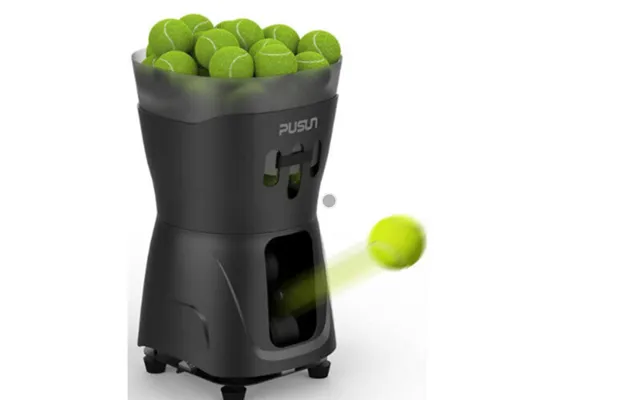
Tennis Ball Machines price list
Last updated Wednesday, 18 Nov 2026
| Tennis Ball Machines | Price |
|---|---|
| Mini Tennis Ball Machine | £70.00 |

View 1 Offers
Loading...
Last updated Wednesday, 18 Nov 2026
| Tennis Ball Machines | Price |
|---|---|
| Mini Tennis Ball Machine | £70.00 |
If you want to get more reps in without begging a partner for time, a tennis ball machine is like having a loyal practice buddy who never complains. These machines deliver consistent feeds so you can focus on footwork, timing, and technique. Imagine hitting 500 groundstrokes in an hour at precise speeds and spins — that kind of repetition accelerates muscle memory the way a metronome trains a musician. Whether you're a weekend warrior, a club competitor, or coaching a junior squad, a ball machine helps you build stroke patterns and sharpen reflexes on your schedule.
Tennis machines do more than spit balls; they let you rehearse scenarios that are tough to recreate with a human partner. Want to practice handling high topspins, neutralizing slice, or perfecting cross-court angles? You can dial in speed in miles per hour, set spin, and control oscillation patterns to mimic real opponents. Machines also measure progress: as your consistency improves at a preset speed and feed rate, you objectively see your game getting tighter. It's like having a coach that runs endless ball feeds while you focus on technique and footwork.
Not every tennis machine fits every player. Some are compact for solo drills, others are built for heavy clinic use. Below are reliable models that cover a broad range of needs and budgets — from portable units for backyard practice to premium, feature-rich behemoths for clubs and pros.
The Lobster Elite Grand is often recommended for club players and coaches who need a balance of capacity and feature set. Expect ball speeds up to around 80 mph, multiple spin settings (including topspin and slice), and programmable oscillation. With a hopper that holds roughly 150 balls and a battery that can last several hours, it’s suitable for medium-length sessions and group drills. It’s not featherlight — you’ll likely move it with wheels — but it delivers versatility and durability.
If portability and compact design are priorities, the Spinshot Player is a popular pick. It can be light enough to lift into a car and often includes remote control, spin adjustment, and random oscillation modes. Typical top speeds range up to about 60–70 mph, which is ample for most club players and juniors. It’s like carrying a mini-coach in a box: quick set-up, easy programming, and reliable feeds for solo drills.
For players watching the bottom line, the Tennis Tutor ProLite and similar models provide core functionality at a lower price point. Expect a modest ball capacity, fewer programmable drills, and lower top speeds — usually enough to practice groundstrokes and volleys without breaking the bank. These machines are great entry points: they let you test whether machine-based training suits your routine before upgrading to higher-end equipment.
For advanced players and coaches who want everything — precise spin control, high top speeds near 90 mph, shuttle-based oscillation, and extensive programmable drills — premium machines deliver. These units often feature durable construction, large hopper sizes, and heavy-duty batteries that run multiple hours between charges. They can simulate sophisticated match conditions, from powerful serves to heavy kick passes that test your footwork and reaction time.
Choosing the right machine is about matching features to your practice goals. Here are the most important specs to consider so you spend on what matters and skip what you won’t use.
Ball speed is measured in miles per hour — a crucial spec. Recreational players might be content with 30–60 mph, while advanced players need units that go 70–90 mph. Spin control is just as important: topspin changes the ball’s bounce and rhythm, while backspin keeps the ball low. Some machines list RPM ranges; if you want realistic topspin or slice, look for models that allow fine-grained spin adjustments.
Oscillation determines how the machine distributes balls across the court. Fixed mode repeats the same spot; lateral oscillation sweeps side to side; vertical oscillation alters depth. Random oscillation simulates an unpredictable opponent. If you want match-like practice, choose machines with both programmable oscillation patterns and adjustable intervals between feeds.
Feed rate is how many balls are sent per minute, and interval is the gap between each shot — both dictate the rhythm of your session. Hopper capacity matters if you hate constantly refilling; larger hoppers let you do longer drills without interruption. For example, a 150-ball hopper paired with a 30/45 feed rate keeps sessions flowing for a long time, good for drills that focus on endurance and repetition.
Think about where you’ll use the machine. If it’s for home practice and you’ll carry it to the car, weight in pounds matters. Many portable models weigh between 20–45 pounds and come with wheels and handles. Battery life is typically quoted in hours — common ranges are 2–6 hours depending on speed and oscillation settings. If you need all-day clinic work, consider buying a spare battery or a model that supports AC power.
Modern machines use onboard controls, remotes, or smartphone apps. Look for easy programming if you plan to cycle through complex drills. Preset drills save time, while manual modes allow you to fine-tune every feed. Remote control can be invaluable for solo players who need to adjust settings without walking back to the machine between sets.
Ball machines unlock focused, repeatable drills. Below are practical drills that translate directly into match improvement — you can mix and match speed, spin, and placement to build variety.
Set a steady feed rate and moderate speed, then focus on hitting a single target zone repeatedly for 50–100 balls. This drill forces you to work on foot positioning and timing. Start slower to perfect mechanics, then increase speed up to match pace to improve reaction times and endurance.
Angle the machine or use a high-speed setting to simulate different serve types: flat, slice, and kick. Practice returning toward corners and down-the-line shots. For realism, alternate feed depth and spin to mimic varied servers. This is one of the best ways to change a weakness into a weapon.
Use a combination of groundstrokes and short, low feeds to practice transition from baseline to net. The machine can feed a deep ball followed by a short ball to force an approach and immediate volley practice. This helps build timing for half-volleys and sharpens net coverage.
Like any piece of equipment, a ball machine lasts longer with simple care. Follow these maintenance tips so you don’t lose practice time to avoidable breakdowns.
Wipe the exterior after each session, remove dust and debris from the hopper, and inspect the wheels and feed head for wear. Clean rollers and spinning wheels gently with a soft brush; avoid harsh solvents. Regular inspections help you spot frayed belts or worn parts before they fail during a session.
Recharge batteries after use but avoid leaving them at full discharge for extended periods. If you store the machine for a season, keep the battery at roughly half charge in a cool, dry place to extend battery life. For heavy users, keeping a spare battery on hand is a smart insurance policy.
Keep your machine covered when not in use and avoid operating it in heavy rain. If you practice outdoors year-round, look for machines with weather-resistant casings or removable electronics. Freezing temperatures can harm internal components, so store the unit indoors when temps drop below freezing.
Accessories can make practice smoother and more effective. A few well-chosen extras will save time and expand the ways you use the machine.
Buy quality practice balls that match your machine and court surface. Durable, pressureless balls cost more upfront but last longer and keep hopper jams to a minimum. Having two hoppers or a ball bag makes quick refills painless, keeping your session momentum high.
Remote controls are a convenience; smartphone apps add advanced programming and firmware updates. Some models accept SD cards or program cards for loading custom drills — these give you instant access to complex routines without manual input during a session.
Consider a padded cover for travel and a small dolly or cart if you move the machine frequently. Ground tarps protect the machine from dirt and moisture during outdoor use. For club owners, a lockable storage case protects against unauthorized use and weather exposure.
Tennis ball machines span from economical to premium; your choice should reflect how and where you play. Entry-level machines (budget models) often range near the lower end and give core features. Mid-range machines add better spin control, larger hoppers, and longer battery life. Premium machines — usually the priciest — offer near-pro levels of speed and programmability plus heavy-duty build quality. Think about how often you'll use the machine, whether you'll travel with it, and whether you need advanced spin and programmable drills before locking in a budget.
Before making a purchase, compare specs side-by-side on comparison sites and read user reviews from players who practice in conditions similar to yours. Look for detailed accounts about durability, real-world battery life in hours, and ease of service. Comparison tools help you filter by speed (mph), weight (lbs), and features like remote control and oscillation. Always check multiple sources so you get a rounded picture of a machine’s strengths and weak points.
When you narrow your choices, ask yourself a few quick questions: Will I move this machine often? Do I need high-speed drills for advanced pace? Is long battery life important for lesson-heavy days? If portability matters, prioritize weight and wheels. If coaching clubs, prioritize hopper size and programmability. Choosing a machine that matches your most common practice scenario ensures it earns its place on your court.
Tennis ball machines are investment tools that turbocharge practice time, build consistency, and enable targeted training that’s hard to replicate otherwise. Whether you pick a portable unit for solo sessions, a mid-range model for serious club training, or a high-end device for pro-level simulation, focus on the features that match your goals: speed in mph, spin capabilities, oscillation patterns, battery life in hours, and ease of use. With careful comparison and a little maintenance, a good ball machine will give you more quality swings, better muscle memory, and faster improvements on court.