

Landscape Fabric Accessories price list
Last updated Monday, 19 Oct 2026




View 6 Offers
Loading...
Last updated Monday, 19 Oct 2026
If you've ever wrestled with stubborn weeds or watched mulch sink into the soil, you know the frustration of garden upkeep. Landscape fabric is a simple solution, but it's the accessories—staples, edging, tape, and underlayment—that turn a flimsy sheet into a durable barrier. Think of fabric as a coat and the accessories as the buttons and stitches that keep it secure through wind, rain, and seasons.
Using the right accessories saves time, reduces maintenance, and protects your plants and hardscape. Whether you're installing a bed liner, laying rock paths, or prepping under pavers, the small items you choose dictate how long the system will last and how neat it looks. Let’s walk through what matters and how to pick the best gear for your job.
Not all landscape fabric is the same. There are woven fabrics, non-woven geotextiles, and biodegradable options—each has strengths for specific tasks. Woven fabrics are like a tight sweater: great for weed suppression and durability. Non-woven geotextiles act like filters, letting water through while preventing soil migration. Biodegradable fabrics break down over time, ideal where you want temporary weed control without long-term barrier.
Woven fabrics are typically made from polypropylene and come in weights described by ounces per square yard or by grams per square meter. In real terms, a heavy-duty woven fabric will resist tearing and handle foot traffic. Non-woven fabrics, on the other hand, resemble felt; they’re better at drainage and are preferred under gravel or pavers where water needs to pass freely.
If your goal is to avoid a permanent barrier—say, in vegetable beds or around new plantings—biodegradable fabrics made from jute or coir are attractive. They suppress weeds for a season or two and then decompose, returning organic matter to the soil. Just remember: biodegradable options won’t hold up under heavy gravel or frequent foot traffic.
Buying a roll of fabric is just the start. The accessories you add determine how straight edges stay, how well seams hold, and whether the fabric survives storms. Here are the essentials to include on your shopping list.
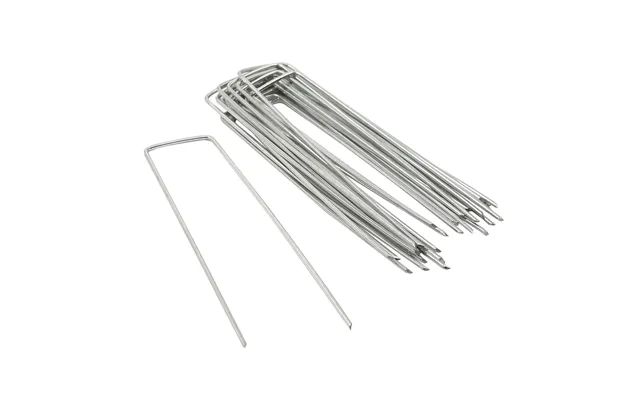
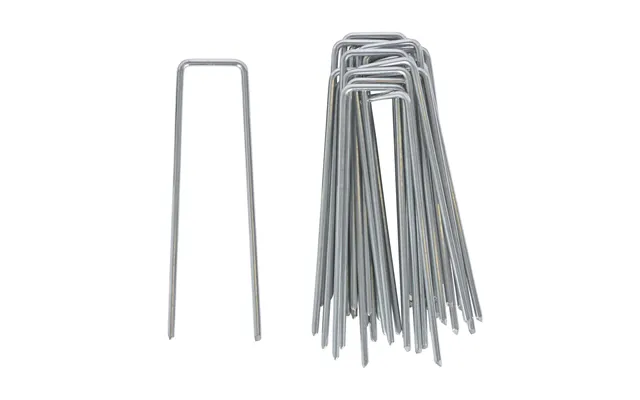
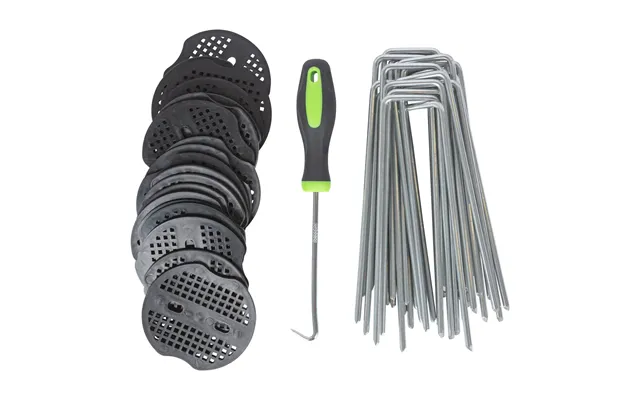
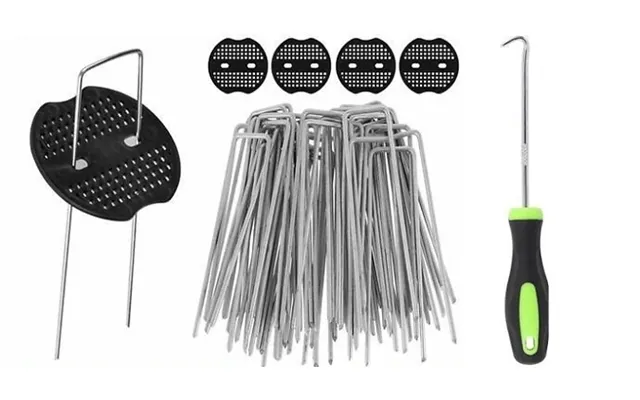
Staples (also called landscape nails or U-pins) are the primary way to secure fabric. For garden beds, use 4 in staples spaced 12 in apart; for high-traffic areas or under gravel, step up to 6 in or 8 in heavy-duty pins spaced 6 in to 8 in apart around seams and edges. Look for galvanized steel to resist rust—staples bent into the soil give you a reliable hold for years.
Edging trims the visual edge and secures your fabric’s perimeter. Metal or plastic edging strips provide a crisp line between lawn and bed and keep mulch or rock from spilling. Use 6 in to 12 in edging stakes to pin the edging every 18 in to 24 in for a neat, lasting finish. If you want a more permanent look, steel edging is worth the extra cost.
When runs of fabric meet, tape and seam connectors create a smooth, weed-proof union. Fabric tape is usually weatherproof and designed to bond with the membrane to prevent gaps. Overlap seams by at least 6 in and secure with tape plus a couple of staples every 12 in for solid coverage. For heavy-duty geotextiles under patios, specialized seam connectors are recommended.
Under patios or driveways you’ll need thicker geotextile fabric—often specified in mils or by weight—that stabilizes base materials and prevents soil migration. Consider a non-woven fabric rated for load distribution and drainage. Typical widths come in 3 ft, 6 ft, or 12 ft rolls, and lengths commonly run 25 ft to 100 ft, so plan accordingly.
One of the most common mistakes is underestimating how much fabric and how many accessories you need. Start by measuring beds and paths in feet. Roll widths are often 3 ft, 4 ft, 6 ft, or 12 ft; pick a width that minimizes seams. For example, a 10 ft bed is easiest with a 12 ft roll to avoid joins.
Measure each area in feet and add an extra 1 ft at the edges for anchoring or tucking under edging. For multiple beds, sketch a simple layout and sum the linear footage. If you have a 50 ft roll that is 3 ft wide, you’ll cover about 150 square feet. Always buy a little extra—about 10%—to account for overlaps and trimming mistakes.
Installation separates a temporary fix from a long-lasting solution. Lay fabric on smooth, weed-free soil. Remove perennial roots and level the surface where possible. Stretch the fabric lightly but don’t try to pull it taut like a drum; a slight relaxation will prevent tears when the soil settles.
Use a sharp utility knife or heavy-duty scissors for clean cuts. Overlap seams by at least 6 in; in high-weed-pressure areas, increase overlap to 12 in and tape the seam. Secure the overlap with at least one staple every 12 in to prevent wind lifting. Remember, the fewer gaps, the fewer weeds.
When installing around existing plants, cut an X or a T into the fabric and fold the flaps back to expose the soil. Fit the fabric snug to the plant base and staple the flaps down. For new plantings, pre-cut planting holes and fold the fabric edges inward to create a small collar that keeps soil where you want it.
Landscape fabric reduces effort, but it isn’t maintenance-free. Do top fabric with a 2 in to 4 in layer of mulch or 1 in to 2 in of decorative gravel to protect it from UV and foot traffic. That top layer also hides seams and staples for a cleaner look.
Don’t let plant crowns stay buried under fabric, and don’t use fabric under recently planted bulbs unless you cut generous planting holes. If weeds manage to sprout, pull them before they establish roots; a weed that matures will send roots under the fabric and create holes you’ll wish you hadn’t.
Choosing the right product is about matching features to application. For perennial beds, choose heavyweight woven fabric that resists tearing. For drainage and underpaving, choose non-woven, water-permeable fabrics. UV-stabilized materials plus a 5-year to 20-year rated lifespan will pay off. And for accessories, galvanized or stainless materials increase longevity.
Landscape fabric plays different roles depending on the surface above. Under mulch, it’s mostly about weed prevention and keeping mulch clean. Under gravel or stone it prevents the stones from sinking into the soil and reduces weeds, but it must allow water to pass freely.
When laying driveways or heavy gravel paths, combine a geotextile layer with a compacted base to prevent rutting. Use pins every 6 in along edges and every 12 in on seams to keep the fabric from shifting before you add stone. Take care to use a fabric rated for load distribution—thin weed fabric will disintegrate under constant weight.
If you’re eco-conscious, look at jute or coir mats and biodegradable woven fabrics. These are excellent for annual beds or temporary weed control while perennial plants establish. Aeration and water infiltration remain important: biodegradable fabrics let nutrients flow back into the soil eventually, which is great for long-term garden health.
Prices vary widely. Expect to pay more for thicker fabrics and heavier-duty accessories. A basic weed barrier roll in a 3 ft by 50 ft size is affordable, while 12 ft by 100 ft heavy-duty geotextiles and galvanized accessories cost more but last far longer. Think about lifetime cost, not just upfront price—spending a bit more on quality staples and proper underlayment often saves money over years.
A few simple errors can ruin the effectiveness of landscape fabric. The biggest is failing to overlap seams and anchor edges properly—gaps are invitations to weeds. Another common mistake is leaving fabric exposed to sunlight; UV degrades most fabrics, so always cover it with mulch or stone. Finally, don’t use permanent black plastic in place of proper fabric—plastic stops water and air, harming soil life.
Match accessories to scale: for a small flower bed, 4 in staples, 3 ft fabric width, and plastic edging might suffice. For a large rock garden or driveway, use 6 in to 8 in steel pins, 6 ft to 12 ft fabric widths to minimize seams, and heavy steel edging set with 12 in stakes. Right-sizing materials reduces installation time and improves durability.
Before you click “buy,” run through a quick checklist: measure area in feet, choose an appropriate fabric type (woven for weed control, non-woven for drainage), pick staple length based on substrate, and select UV-protected tape for seams. Also, plan to buy 10% extra fabric and 20% extra staples—it's better than a last-minute run to the garden store.
With the right combination of fabric and accessories, you’ll turn a seasonal chore into a low-maintenance, neat, and long-lasting garden feature. Ready to roll up your sleeves?
Conclusion: Landscape fabric accessories are small investments that yield big returns. From sturdy staples to correctly rated underlayment, choosing the right mix for your project means fewer weeds, less maintenance, and a more attractive outdoor space. Match fabric types to use, measure carefully in feet and inches, and anchor everything well—your future self will thank you every weeding season.