

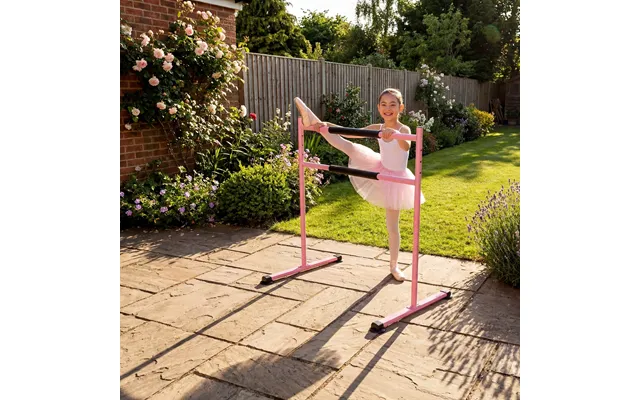
Ballet Barres price list
Last updated Monday, 19 Oct 2026
| Ballet Barres | Price |
|---|---|
| Sportspower Ballet Barre | £29.99 |





Loading...
Last updated Monday, 19 Oct 2026
| Ballet Barres | Price |
|---|---|
| Sportspower Ballet Barre | £29.99 |
If you’re serious about dance—or even just committed to improving flexibility and balance—a good ballet barre is a game changer. Think of it like the spine of your practice: supportive, reliable, and quietly doing its job while you focus on form. Whether you’re training for pointe work or stretching after a long day, the right barre helps you feel stable and confident. It’s amazing how a solid rail at the right height can instantly upgrade a home studio.
Freestanding barres are the go-to for home users who need flexibility. They don’t require drilling into a wall and usually collapse or fold down for storage. Typical freestanding barres weigh anywhere from about 10 to 35 pounds and stand between 36 and 42 inches tall. You’ll find single-rail and double-rail versions—double rails are great for teachers or partners working together.
Wall-mounted barres are the most stable option and are common in studios. They’re fixed at a specific height and offer a clean, permanent solution. If you have a dedicated practice space and want the feel of a professional studio, a wall-mounted rail—usually installed at about 42 inches for adults—will give you the truest feedback for alignment.
Adjustable barres let dancers of different heights practice together by moving the rail up or down in small increments. Double barres provide two rails at different heights, often spaced a foot or more apart, which is great for mixed-level classes or working with children and adults in the same session.
Barres are commonly made from wood, steel, or a combination. Wooden rails—often birch or maple—feel warm to the touch, provide a classic grip, and are usually about 1.5 inches in diameter, which fits the hand nicely. Metal barres (steel or aluminum) can offer a sleeker look and greater durability, but some dancers prefer the feel of wood. Look at the base and connectors: powder-coated steel bases resist chips and rust, and reinforced brackets reduce wobble. If a barre lists a weight capacity, that’s an important number—higher-capacity rails will feel sturdier under strenuous practice.
When shopping, keep an eye on these practical features: height adjustability (in 1-inch increments is ideal), non-slip bases or rubber foot pads to protect floors, foldable frames for compact storage, and rail diameter (about 1.25–1.5 inches is comfortable for most hands). If the barre is freestanding, check its footprint in inches—wider bases generally mean less tipping. For wall-mounted options, confirm the bracket spacing in inches and whether the set includes hardware like 3/8-inch lag bolts or requires separate purchase.
Price varies widely depending on type and build. A basic kids’ portable barre can start at around £25 to £50, whereas a solid wooden wall-mounted rail for adults might be £40 to £200. Studio-grade double barres or heavy-duty adjustable systems often range from £150 up to £600 or more. For barre-and-mirror combos or professional installations, you could be looking at £300 to £1,000, depending on mirror size and mount type. Think of it as investing in your practice: cheap options work for light use, but heavier, more stable units pay off if you train often.
If you’re starting out and working in a small space, a lightweight freestanding barre with a folding frame is a smart pick. Look for models that weigh about 12–20 pounds and collapse flat so you can slide them under a bed or behind a couch. These usually adjust between roughly 28 and 42 inches, which covers kids and adults alike.
For committed students or established home studios, a solid wooden wall-mounted barre about 1.5 inches in diameter is ideal. Mount it at about 42 inches for adults; younger dancers may prefer 36 inches. Choose a kit that includes heavy-duty brackets and screws designed to anchor into studs. The stability will make a real difference during balance work and fast footwork.
Double barres are perfect for mixed groups or teaching. Go for models with rails spaced around 12 to 18 inches apart; common heights are 36 inches and 42 inches. Heavy cast-iron or reinforced steel bases weigh more—often 30–60 pounds combined—so they stay put during plies and port de bras.
A barre is just the beginning. Ballet shoes or practice slippers, a portable dance mat for fragile floors, and a full-length mirror can triple the quality of your home sessions. Resistance bands add strength training to your barre work, while foam rollers and yoga blocks help with recovery and mobility. Don’t forget grippy socks for warm-ups and ankle weights if you’re doing targeted strengthening routines. When choosing a mat, aim for at least 6 feet of practice space cleared and a mat thickness that offers cushion without instability—around 1/4 to 1/2 inch thickness often works well for turnout exercises.
Safety first. If you’re mounting a barre to a wall, locate studs and use proper 3/8-inch lag bolts or anchors rated for the load; a 1/4-inch drill bit can help open pilot holes in many studs. For drywall-only installations, use heavy-duty anchors rated for the weight you expect to apply. For freestanding barres, place them on a flat surface and check rubber foot pads regularly to avoid scratches on hardwood flooring. If you have a carpeted space, opt for a wider base or use a board under the feet to reduce wobble. And always test a new barre slowly before full workouts to feel how it responds under your weight.
How tall should your barre be? A general rule is to set the barre roughly at hip height. For most adults, that’s about 40 to 42 inches. For children or shorter adults, 36 inches is common. If you’re buying an adjustable model, look for one that covers a range from 28 to 42 inches so you can fine-tune the height in 1-inch steps. Think of the barre like a trusty handrail: it should allow you to reach it comfortably with a small bend in the elbow, not with your shoulder hunched up.
Reviews are gold when you’re deciding between similar models. Look for comments on wobble or sturdiness, ease of assembly, and how the barre holds up over time. If multiple users mention a base slipping on hardwood, that’s a red flag—search for models with larger rubber pads or a wider stance. Likewise, pay attention to notes about finish: splintering on wooden rails or chipping paint on metal parts can speak to long-term durability. A good review will mention how the barre performs during real exercises, not just how it looks out of the box.
Comparison sites and deal aggregators often list “popular offers” and price lists so you can quickly see how different vendors stack up. Use those to compare models, full kits with mirrors, and bundles that include mats or shoes. Seasonal sales—around the start of dance terms or major holidays—are also prime time for discounts. Just remember to check the specs carefully: two barres priced the same might differ hugely in weight capacity, rail diameter, or included hardware.
Feeling handy? DIY barres can be a satisfying project and let you customize height, finish, and length. A simple DIY barre uses a finished wooden dowel of about 1.5 inches in diameter, metal brackets, and screws anchored into studs. If you want something polished, hire a carpenter to custom-mill a rail and mount. Custom studio installations can include integrated mirrors, shelving for accessories, and even adjustable rails that move with gas springs. Remember to keep safety and load ratings in mind if you go custom—professionals can certify installations for heavy use.
No big spare room? No problem. Folding barres that collapse to a few inches thick are perfect for apartments. Another option: install a wall-mounted rail on a hinge so it folds flat against the wall when not in use. Mirrors on sliding panels can double as doors for a closet, saving space and giving you a full-length view for alignment work. Even a simple 5- to 6-foot barre section is enough for effective daily practice.
Keep your barre in top shape by wiping wooden rails with a slightly damp cloth and mild cleaner; avoid soaking the wood. Metal bases benefit from occasional dusting and, if needed, a small amount of rust-preventative oil on exposed screws. Check hardware every few months—tighten screws and replace any worn rubber feet. For wooden rails, light sanding and a fresh coat of finish every few years will keep the surface smooth and splinter-free.
Here’s a quick checklist: confirm the rail diameter and length, check height range in inches, verify weight or load capacity in pounds, look for included mounting hardware, read recent reviews about stability, and compare prices across sellers. If you’re buying a combo with mirrors or mats, confirm total delivery dimensions so you can move pieces into your space. When in doubt, favor sturdiness: it’s worth a slightly heavier unit to avoid frustrating wobble during practice.
Your barre will be part tool, part partner in training. Investing in a stable, comfortable rail pays off in better technique and fewer distractions during practice. Whether you want a folding barre for a compact apartment, a wall-mounted rail for studio-like stability, or a double barre for teaching, there’s a model to match your needs and budget. Use comparison resources to spot popular offers and price lists, then cross-check specs and reviews so you end up with the best match for your routine.
Conclusion: Choosing a ballet barre is equal parts practical decision and personal taste. Focus on stability, proper height, and the right footprint for your space. With the correct barre and a few smart accessories—shoes, a mat, and perhaps a mirror—you can recreate studio-level training at home and see real gains in strength and technique.